


Thongs Swimsuits Explained for 2026 Style, Coverage, Fit, and Confidence
Posted by ROBOT-SPEED

A thong swimsuit is a swimwear bottom with minimal rear coverage, typically leaving the buttocks exposed and held by narrow side straps or cords. In France, the style is called maillot de bain string, string de bain, or bikini string. French dictionaries and retailers distinguish it from ordinary bikini bottoms by its deliberately reduced coverage.
The principal appeal is reduced visible tan lines and a visually less bulky silhouette under a cover-up. French retail descriptions also associate the cut with exposing more of the legs and rear.
These are practical or aesthetic advantages, not universal benefits: the cut provides less coverage and may offer less perceived security or comfort than a tanga or conventional brief.
Rear-coverage terminology is not perfectly standardized across brands. Products described as tanga generally indicate more coverage than a string, but the actual pattern should be checked.
Comfort, suitability for active swimming, and confidence depend on the cut, lining, fabric stretch, fastening, and individual fit. Beach and pool policies vary: some French municipal pools expressly prohibit wearing a string, while public beaches and private clubs may apply different rules.
What Makes a Thong Swimsuit Different?
The defining feature is the rear panel: a thong bottom uses minimal fabric, often a narrow strip or small panel held by thin cords or straps, leaving much of the buttocks exposed. French dictionaries and retail catalogs distinguish it from an ordinary bikini bottom by this deliberately reduced coverage, which creates a markedly different silhouette from fuller-cut styles.
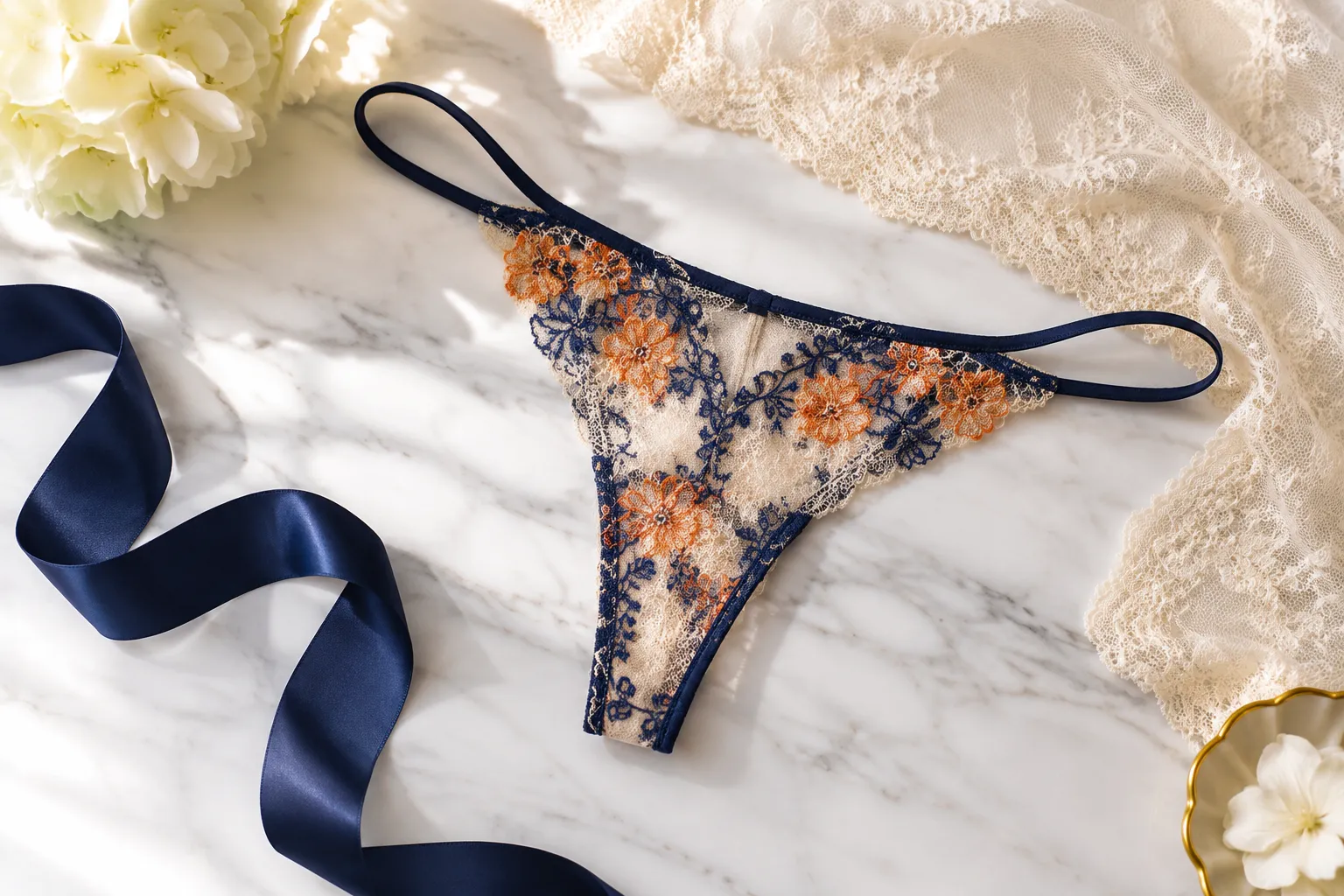
The construction typically features narrow side straps or adjustable ties rather than elasticated panels. Some designs place a cord between the buttocks; others attach a small fabric triangle to thin straps at the hips.
The front panel resembles a standard bikini, but the rear coverage is substantially smaller.
String, Tanga, and Brazilian Distinctions
French retailers use several overlapping terms. A tanga generally provides more rear coverage than a string, though the actual cut should be verified through product images.
A Brazilian or brésilien bottom commonly reveals part of the buttocks rather than almost all of them, positioning it between a conventional brief and a true thong. Terminology such as ficelle, micro bas, and string is not fully standardized across brands, so the rear-coverage description and measurements matter more than the label itself.
Retail descriptions often emphasize minimal tan lines and a visually elongated leg line as design benefits, though those are appearance claims rather than functional performance guarantees.
Why Are Thong Swimsuits Changing Beach Style?
Check the actual rear pattern rather than relying on “tanga” or “string” labels, since coverage terminology varies across brands.
The appeal rests on three practical distinctions: reduced visible tan lines, a visually less bulky silhouette under lightweight cover-ups, and a cut that exposes more of the legs and rear. French retail descriptions position these as design advantages, though they remain aesthetic rather than functional benefits. The garment provides less coverage and may offer less perceived security or comfort than a tanga or conventional brief.
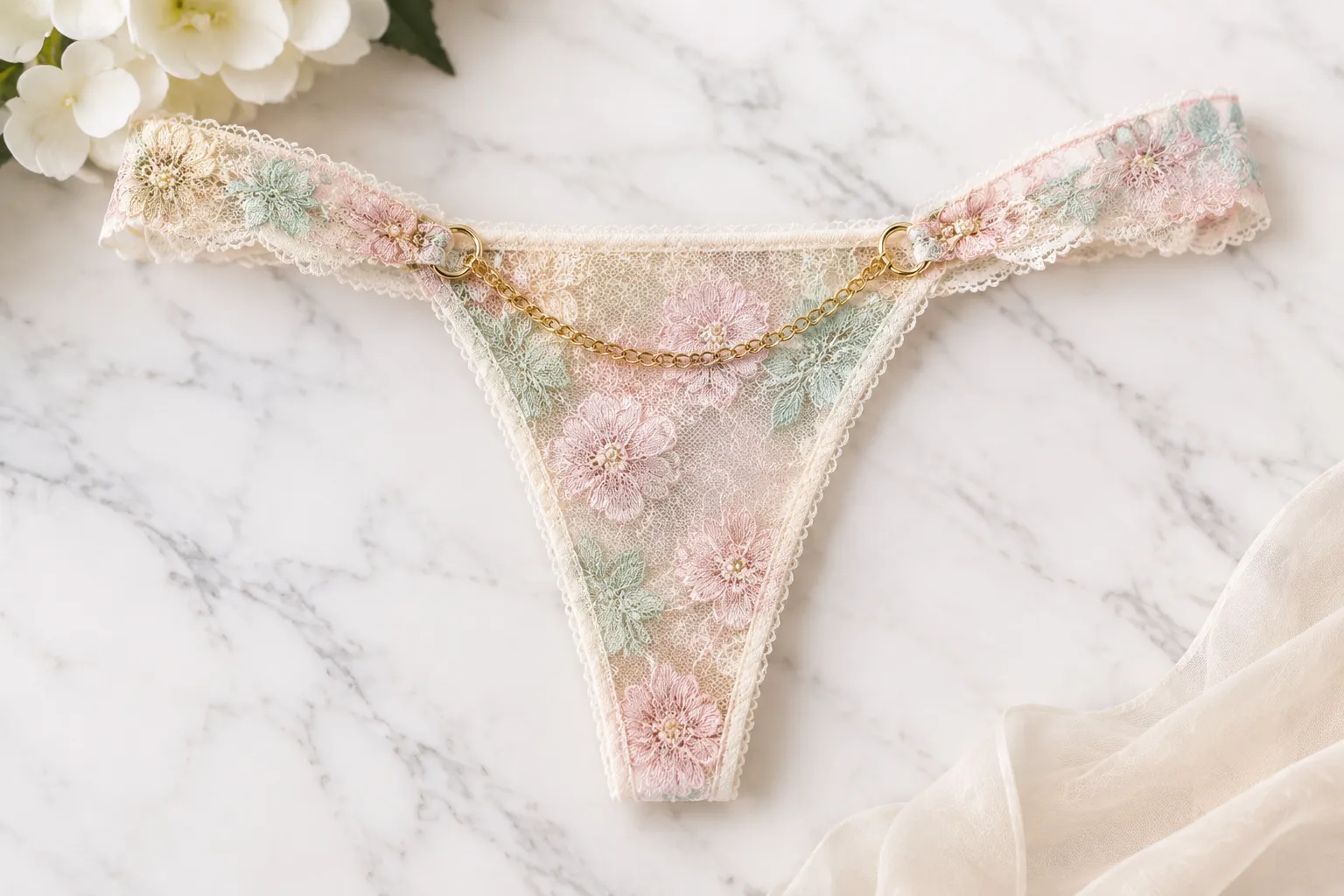
The Appeal of Fewer Tan Lines
Minimal fabric reduces the visible boundaries left by sun exposure, which matters to people who prefer more even tanning. This is a practical advantage for appearance under different garments, not evidence that the cut provides better sun protection. Proper sunscreen remains essential regardless of coverage.
The same reduced coverage creates a visually streamlined silhouette, particularly under wrap skirts, oversized shirts, and lightweight resortwear. Less fabric means a less obvious line under sheer or draped garments, which can be useful when styling beachwear as outerwear.
Where Minimal Coverage Feels Less Practical
Reduced rear coverage may feel less secure during movement, especially in water or during active beach activities. A tanga or conventional brief offers more fabric and often more perceived support, which some swimmers prefer.
The features that create the minimal look, narrow straps and a small rear panel, also reduce the garment's hold and coverage.
Confidence depends on personal comfort, fit, venue expectations, and context rather than on the cut alone. A micro bikinis brasileños style may suit a private pool or a beach where the cut is common, but may feel impractical in settings where more coverage is expected or where the wearer anticipates movement.
The choice remains personal: the same design that appeals for its minimal aesthetic may not provide the coverage or security someone needs for a different activity.
How to Choose the Right Cut, Size, and Fit
Begin with the brand's measurement chart rather than relying on standard sizing. Swimwear sizing varies across manufacturers, and a thong swimsuit demands accurate waist and hip measurements because minimal rear coverage leaves less room for adjustment.
Measure the natural waist, the widest part of the hips, and the rise (the distance from the front waist to the back waist through the crotch) to determine whether a given pattern will sit comfortably without shifting.
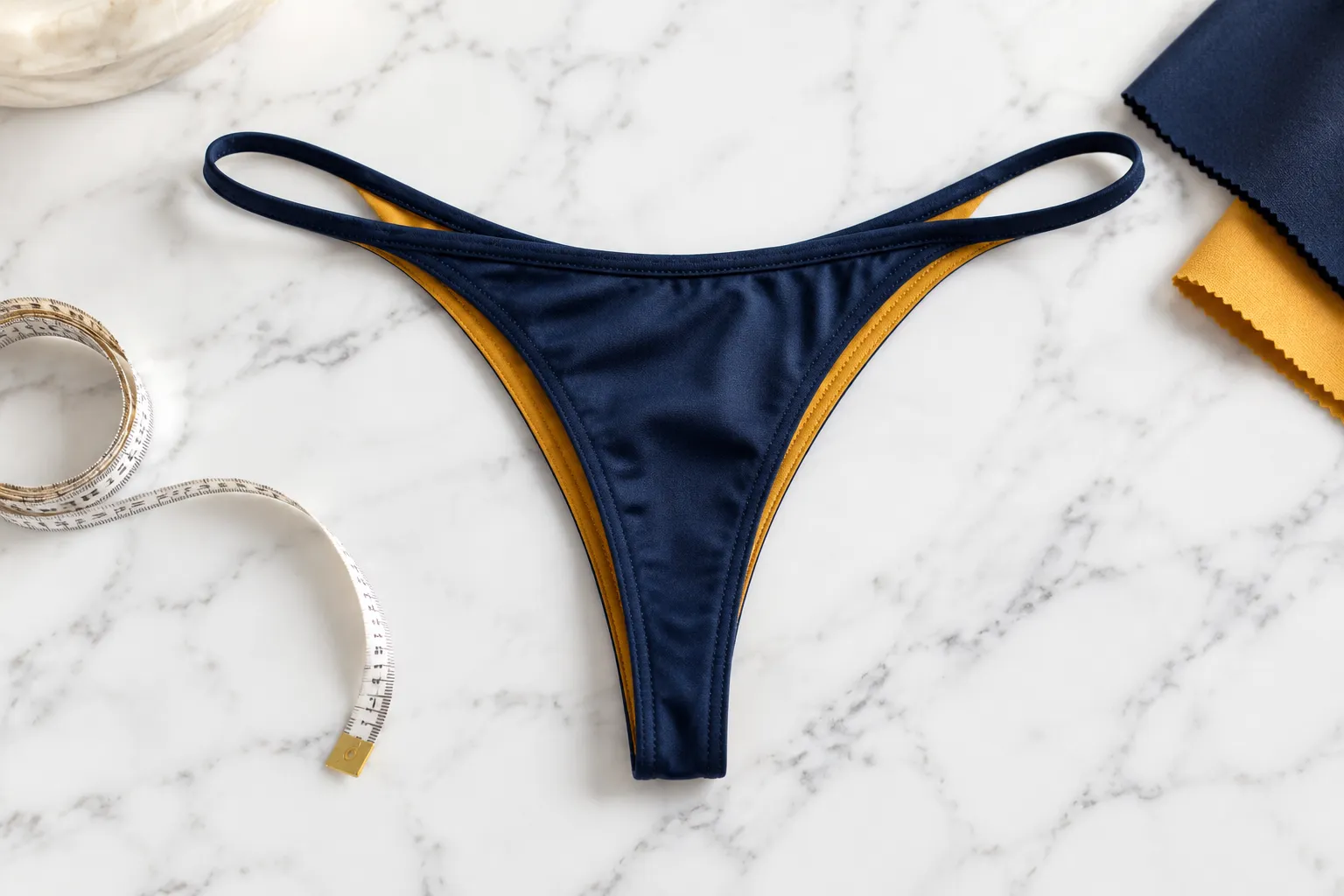
Examine the side-strap placement and the width of the rear panel in the product images and technical description. Adjustable ties offer flexibility around the waist or hips, but they can shift during movement.
A fixed elastic band typically holds the garment more securely, though it allows less adjustment once purchased. The rear panel should rest flat against the body without digging into the skin or creating visible tension along the edges.
Read the Pattern Before You Buy
Retail terminology is not standardized. French retailers use string, tanga, brésilien, micro, and ficelle inconsistently. A product labeled tanga may offer more coverage than a string from one brand but less from another.
Check the product photograph and the stated rear-coverage description rather than assuming the label alone defines the cut.
If you want a similar silhouette with more rear fabric, a tanga or Brazilian style typically reveals part of the buttocks rather than almost all of them. These alternatives provide a middle option between a conventional brief and a true thong.
Check Movement, Tension, and Comfort
Test the intended use mentally or physically. Walk, sit, stretch, and consider applying a cover-up to confirm that the garment stays in place without excessive shifting or pressure.
A correct fit should not dig into the hips, slip during movement, or require constant adjustment. Thong swimwear provides less fabric and often less perceived support than fuller cuts, so the garment must fit precisely at the waist and hips to remain secure in water or during active beach activities.
Verify the fabric composition on the French label. Because the garment sits directly against the skin, material quality and finishing matter.
French enforcement monitors chemical risks in swimwear under applicable European rules, including restrictions on azo dyes.
Lola Luna Lingerie applies its French workshop heritage and focus on refined materials to lingerie construction; similar attention to fabric and finishing should guide your swimwear choice.
Where Does This Swimwear Work Best?
A thong swimsuit suits settings where minimal coverage aligns with venue expectations and personal comfort. Private pools, resort terraces, and beaches where the cut is commonly worn offer appropriate contexts.
The style works well when the wearer understands the dress norms of the location and feels confident with the level of exposure.
Public beaches in France generally permit string swimwear, though local policing or municipal rules may apply in specific areas. Private venues, campsites, beach clubs, and hotel pools can impose their own dress codes, which may differ from public beach norms.
A cover-up such as a wrap skirt, oversized shirt, or kaftan makes the look more adaptable when moving between the water, a terrace, and other leisure settings.
Check the Rules Before Visiting a Public Pool
Municipal pools commonly apply detailed hygiene and safety requirements that restrict certain swimwear styles. Dijon's municipal pool regulations, for example, expressly prohibit string swimwear and require close-fitting, opaque swimwear intended for bathing that does not extend below the knees.
This demonstrates that a thong swimsuit may be acceptable in one French setting but prohibited in another.
Readers should check the current rules of the specific pool, campsite, beach club, or aquatic centre before visiting. A swimsuit suitable for tanning or resortwear may not be appropriate for lap swimming, family facilities, or formal aquatic settings.
Confirming the venue's policy in advance avoids unnecessary inconvenience and ensures the chosen style matches the context.
How to Style and Care for a Luxury Minimal Bikini
A minimal bikini bottom pairs well with a coordinated top in matching fabric or color, creating a cohesive look suited to poolside lounging or resort terraces. Adding a linen wrap, a loose button-through shirt, or a silk kaftan shifts the ensemble toward refined resortwear, offering coverage when transitioning between the beach, a restaurant terrace, and a hotel lobby.
Accessories such as woven sandals, a structured sun hat, or understated jewelry refine the silhouette without competing with the streamlined cut.
The same garment reads differently depending on context and styling. A neutral palette and tailored cover-up create discretion, while bold prints or metallic accents emphasize the cut's daring character.
The choice reflects personal comfort and venue expectations rather than a single correct approach.
Protect Delicate Fabrics and Shape
French retailer guidance commonly recommends rinsing swimwear with clear water after use in the sea or pool to remove salt, chlorine, and sunscreen residue, followed by delicate washing to help preserve elastic fibers and color. This is a care recommendation, not a guarantee of durability.
Avoid wringing, twisting, or exposing the garment to direct heat, since aggressive handling can distort elastic edges and seams.
Follow the garment's care label rather than relying on assumptions about premium fabrics. Air-drying flat or on a towel prevents stretching, while rough surfaces such as pool edges or wooden decking may snag delicate weaves.
Proper handling extends wearability, though no care routine eliminates the effects of repeated chlorine or sun exposure entirely.
Questions to Ask Before Choosing the Style
Before selecting a string swimsuit, consider how the garment will perform in your intended setting and whether the reduced coverage aligns with your comfort and activity level.
Is It Comfortable for Swimming?
Comfort depends on fit, fabric stretch, and how the garment stays in place during movement. A well-constructed string bottom uses elastic and lining that hold the fabric securely without digging into the skin.
However, the narrow rear panel and side straps offer less coverage than a tanga or conventional brief, which may feel less secure during active swimming or water sports. If you plan to swim laps, dive, or play beach volleyball, consider whether the minimal coverage provides enough support for those movements.
What Coverage Alternative Should I Choose?
If you prefer more rear coverage while maintaining a contemporary cut, a tanga offers a middle option between a string and a full brief. A Brazilian bottom typically reveals part of the buttocks but covers more than a true string.
Retail terminology varies, so examine the product image and rear-coverage description rather than relying on the label alone. A high-cut brief may feature deeply cut leg openings without exposing the buttocks, providing a balance between leg elongation and security.
Finally, confirm that your chosen style complies with the dress code of your venue. Public beaches in France generally permit string swimwear, but private pools, campsites, and aquatic centres may impose their own rules.
For example, Dijon's municipal pool regulations expressly prohibit wearing a string, requiring close-fitting, opaque swimwear instead. Check the current rules before visiting.
Frequently Asked Questions About Thong Swimsuits
Is a thong swimsuit comfortable for swimming?
Comfort depends on fit and personal preference. A well-fitted thong swimsuit with secure side straps can stay in place during swimming, but the minimal rear coverage means less fabric to hold and less coverage than a conventional brief.
If you prefer more security during active movement, consider trying the style first in calm water rather than during vigorous swimming or water sports.
What is the difference between a thong, Brazilian, and tanga swimsuit bottom?
A thong provides minimal rear coverage, typically a narrow strip or small panel held by thin straps, leaving the buttocks exposed. A tanga or Brazilian bottom reveals more than a conventional brief but generally covers more of the buttocks than a thong.
Product descriptions using terms such as string, tanga, or Brazilian are not fully standardized across brands, so check the product images to confirm the actual coverage before ordering.
How should I choose the right size for a minimal bikini bottom?
Start with your usual swimwear size and check the brand's size guide for hip measurements. Because a thong has narrow side straps and minimal rear fabric, the front panel and side attachment points need to sit comfortably without cutting in.
If you are between sizes or prefer straps that adjust, look for styles with tie sides rather than fixed elastic, which allows you to control the fit at the hips.
Can I wear this style at a public swimming pool?
Regulations vary by location. Some public pools and municipal beaches require bottoms that provide full rear coverage, while private beaches, resort pools, and certain urban beaches may permit thong swimsuits.
Check the facility's dress code before visiting, or bring an alternative bottom if you are uncertain about the rules.
Does a thong swimsuit reduce tan lines?
Yes. The minimal rear coverage means less fabric blocking sunlight, which reduces visible tan lines across the buttocks and legs.
This is a practical advantage if you prefer an even tan, though it also means more exposed skin requires sun protection. Apply sunscreen to all uncovered areas, especially if you are not accustomed to exposing that much skin.
What should I choose if I want more coverage?
If a thong feels too revealing, a tanga or Brazilian-cut bottom provides a middle option with more rear coverage while still showing more leg than a conventional brief. For full coverage, a classic bikini brief or high-waisted bottom offers security and comfort without the minimal cut of a thong.
Finding the Right Balance Between Style and Comfort
A thong swimsuit offers reduced tan lines and a streamlined silhouette, but the minimal coverage demands careful attention to fit, venue expectations, and personal comfort. Choosing the right cut means balancing aesthetic appeal with how the garment will perform during movement and whether the level of exposure aligns with your confidence and the setting.
Accurate measurements, secure construction, and thoughtful styling ensure the look works for you rather than against you.
When craftsmanship and materials matter, explore handcrafted French lingerie and swimwear at Lola Luna Lingerie, where each piece is made in our workshop near Avignon using Calais lace and silk.

