


Silk & Lace Explained for 2026 From Fabric Properties to Lingerie Care
Posted by ROBOT-SPEED

Silk and lace are distinct materials: silk identifies a fibre obtained exclusively from silk-secreting insects, while lace describes an openwork fabric structure that may be made from several fibres. Under EU textile rules, silk is legally reserved for fibre originating from sericigenous insects, whereas lace is defined by its construction: an openwork textile in which threads form a patterned structure with a more or less visible ground, produced by hand or machine.
In French lingerie, silk and lace usually describe a material pairing rather than a single textile. Silk provides a smooth, soft, fluid base and may appear as woven silk, satin, charmeuse, or silk jersey.
Lace supplies an openwork, decorative structure and can be made from silk, polyamide, polyester, cotton, or blends. The fibre content of lace must be checked separately on the composition label, since lace is a construction category, not a fibre guarantee.
In France, a garment's composition label must state the name and percentage by weight of every textile fibre in descending order. The label must be attached to the product, legible, and written in French. Lola Luna Lingerie has crafted French luxury lingerie since 1975, combining silk and lace in designs that reflect both technical heritage and refined detail.
What Silk and Lace Mean on a Lingerie Label
The two terms identify different textile properties. Under European Union regulations, silk is legally reserved for fibre obtained exclusively from silk-secreting insects.
Lace, by contrast, describes an openwork fabric structure in which threads form decorative motifs against a more or less opaque ground. It may be made by hand or machine, using knitted or knotted stitches.
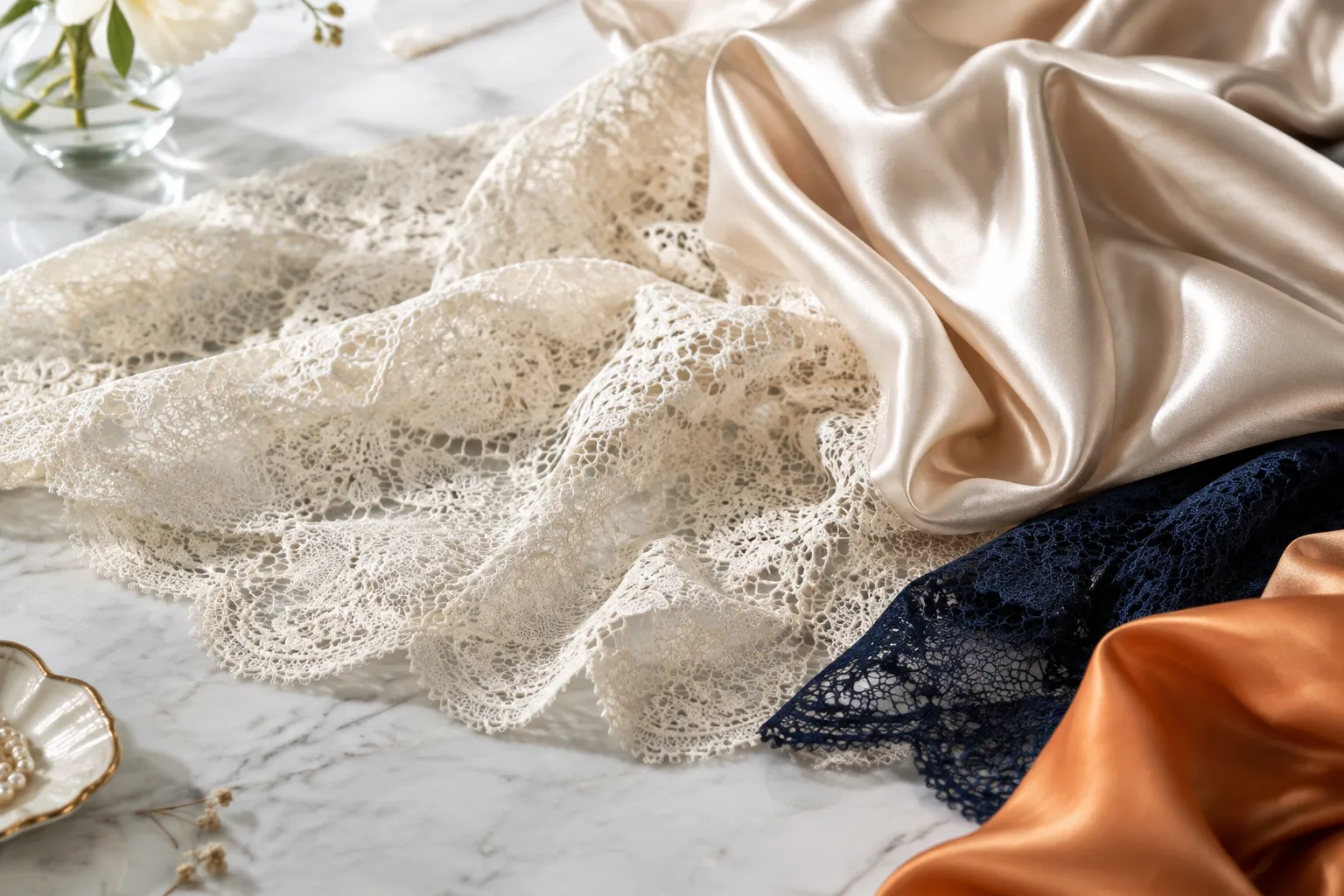
French labelling rules require every garment sold in France to state the name and percentage by weight of each textile fibre, in descending order, on a permanently attached label written in French. Therefore, a product described as combining both materials should specify which fibre the lace itself contains.
Lace may be produced from polyamide, polyester, cotton, viscose, elastane, silk, or blends; the term alone does not guarantee silk content.
Why Fibre Percentages Matter Before You Buy
A phrase such as "silk and lace" remains incomplete until the composition and placement are made explicit. The French textile industry describes lace as a construction category defined primarily by its openwork structure, not by one mandatory fibre.
Consequently, check the composition label before purchase to confirm which fibres are present and in what proportion, particularly when durability, care instructions, or allergies are relevant.
Why These Fabrics Change the and Feel of Luxury Lingerie
Check lace’s fibre content separately on the composition label, because “lace” describes construction rather than guaranteeing silk or any particular fibre.
The sensory and visual differences between these two materials explain their enduring presence in refined lingerie design. Silk delivers a smooth hand feel, natural sheen, and fluid drape that follows the body's contours without stiffness.
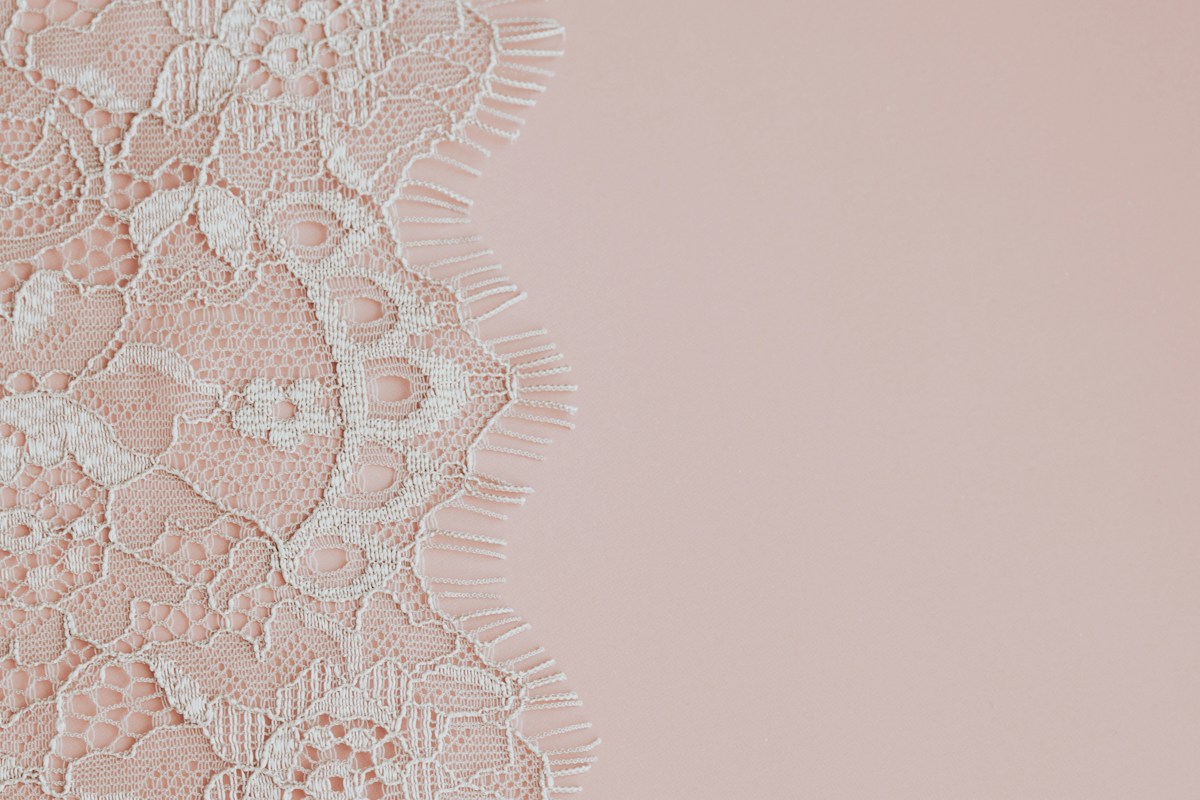
Lace contributes openwork structure, decorative pattern, and controlled transparency that introduces visual texture where smooth fabric would otherwise remain unbroken.
Silk Brings Smoothness, Sheen, and Fluid Movement
Silk's reputation rests on its surface quality and the way light reflects from its fibre structure. The final performance depends on weave, weight, finishing, construction, and the presence of other fibres.
A charmeuse weave produces more pronounced lustre than a crepe weave, while heavier silk falls differently than lightweight habotai. Garments made entirely from silk offer consistent drape and hand, whereas blends introduce stretch or durability by incorporating elastane or other fibres.
Lola Luna Lingerie handcrafts each piece in its workshop near Avignon using silk as one of its noble materials, demonstrating how controlled production can maintain the fibre's sensory characteristics throughout the finished garment.
Lace Adds Transparency, Texture, and Visual Contrast
Lace functions as a decorative structure rather than a solid fabric. Its openwork allows skin or underlying fabric to remain visible, creating zones of transparency that contrast with covered areas.
The openness and softness vary according to fibre content, stitch structure, motif density, and whether the lace is backed or lined. Dense floral motifs yield less transparency than scattered geometric patterns, while a silk lace thread produces a different texture than polyamide.
Combining a smooth silk surface with patterned lace creates deliberate contrast between fluid areas and structured or transparent details. A silk chemise edged with lace, for instance, pairs uninterrupted drape with intricate openwork at the neckline or hem.
Appearance alone can't establish fibre content or manufacturing origin; the composition label remains the only reliable confirmation of what the lace itself contains.
Silk, Lace, or Both: Which Choice Suits the Occasion?
Your choice depends on the balance you want between smooth coverage and decorative detail. Silk-forward pieces deliver a fluid surface and understated sheen that moves with the body, making them appropriate when you need uninterrupted lines under tailored clothing or prefer a minimalist appearance.
Lace-forward designs introduce openwork motifs, controlled transparency, and visual texture, suitable when the garment itself becomes the focal point rather than remaining concealed.
Choose Silk for a Smooth, Fluid Foundation
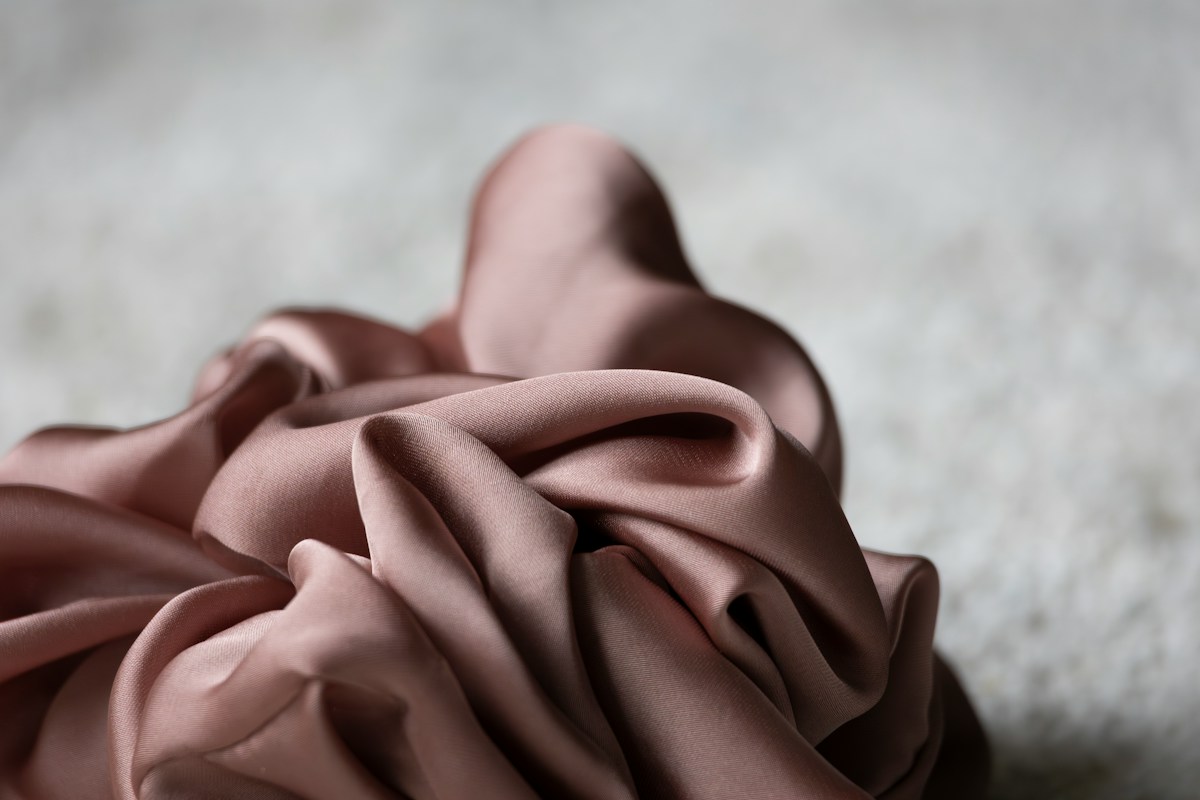
Silk provides a continuous surface without openwork interruptions. The natural fibre offers a soft hand, gentle drape, and subtle lustre that suits everyday wear beneath fitted garments.
Because silk sits flat against the skin, seams and elastic placement matter more than decorative detail; check that waistbands, leg openings, and gusset construction remain comfortable during extended wear.
For special occasions, silk works when you want the silhouette to remain unbroken by pattern or transparency. A silk chemise or slip creates smooth lines and allows the drape to define the shape.
Verify the fibre composition on the label rather than relying on marketing descriptions, since EU textile rules reserve the term silk exclusively for fibre from silk-secreting insects.
Choose Lace Details When Pattern and Texture Lead the Design
Lace introduces deliberate openwork and motif structure. Transparency and texture vary according to thread density, stitch construction, and whether the lace sits directly against the skin or over a lining.
Dense floral patterns reduce visibility, while scattered geometric structures ramp up it. A lace panel on a smooth base combines both effects within one garment.
Combined designs balance softness and visual interest, but comfort depends on construction rather than material names alone. Check how lace edges are finished, whether elastic sections stretch without restriction, and how linings or gussets interact with openwork areas.
A higher price doesn't prove handmade manufacture or superior fibre content; examine the composition label and seam quality directly.
Lola Luna Lingerie offers guipure lace thongs, silk and tulle micro-thongs, and lace and silk lingerie sets that illustrate these material choices within a single luxury range.
How to Care for Silk and Lace Without Losing Their Finish
The sewn-in care label takes priority over any general assumption about silk or lace. French consumer guidance identifies composition labelling as mandatory, while care labelling is strongly recommended to avoid damage or disputes.
Silk-and-lace lingerie should be treated according to the specific instructions attached to each garment rather than a generic rule that every silk item must be dry-cleaned or every lace item can be machine-washed.
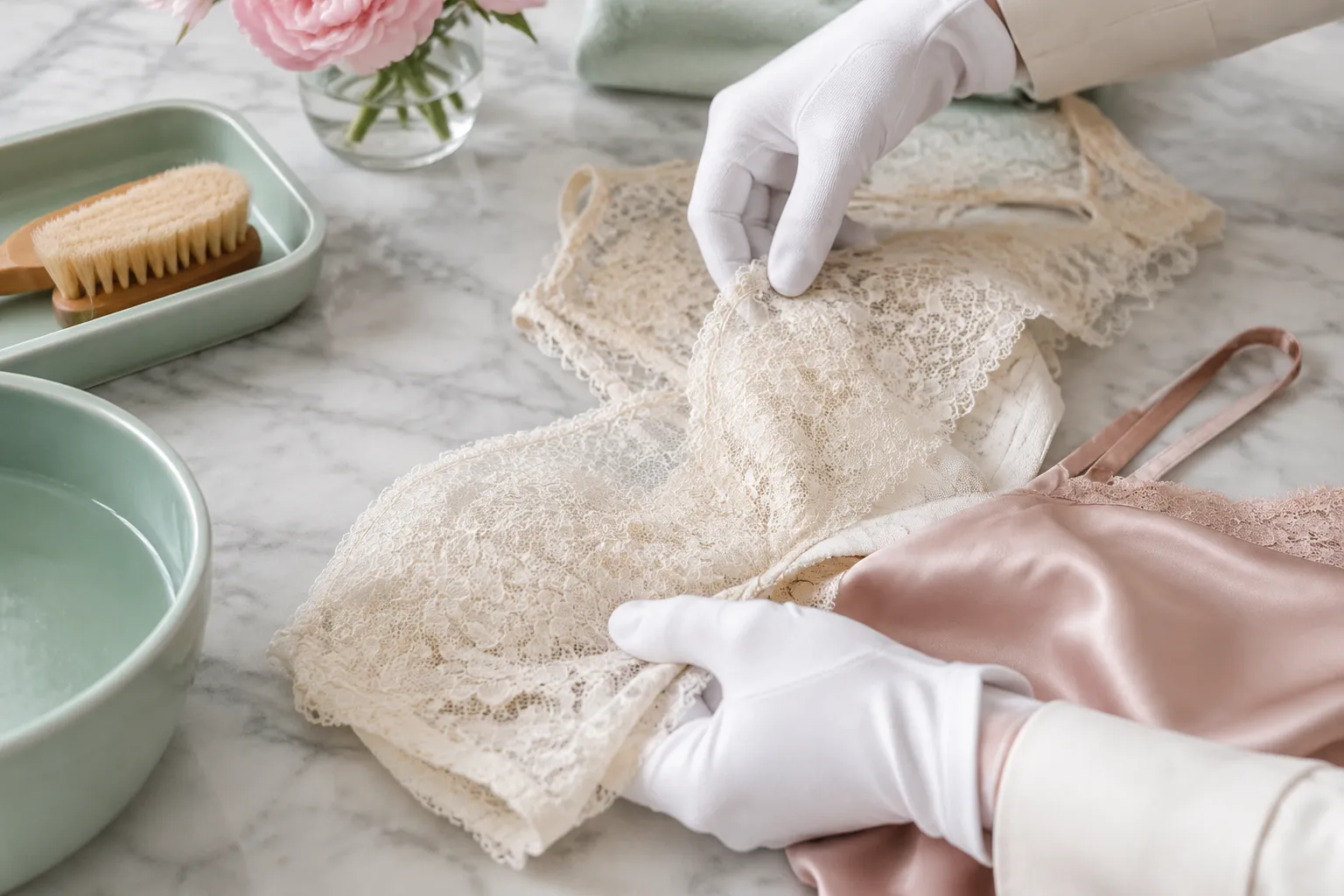
Care symbols indicate the maximum permitted treatment, not necessarily the treatment most likely to maximise longevity. For high-value lingerie, following the gentlest treatment compatible with the label reduces the risk of colour loss, distortion, or fibre damage.
When hand washing is permitted, use lukewarm water and a gentle detergent formulated for delicate textiles. Avoid rubbing or twisting the fabric; instead, gently press the water through the garment and rinse thoroughly to remove all residue.
Protect Openwork and Elastic During Washing and Storage
Lace is defined by its openwork construction, in which threads form a more or less opaque pattern. Handle lace carefully to reduce snagging on jewellery, rough surfaces, hooks, and fasteners.
Fasten any closures before washing to prevent the hooks from catching on the fabric itself or other garments. If machine washing is permitted by the label, place the lingerie in a mesh laundry bag to contain loose threads and protect delicate edges.
Allow garments to dry according to the care instructions and avoid unnecessary heat exposure. Lay them flat on a clean towel or hang them from padded hangers in a well-ventilated space away from direct sunlight, which can weaken silk fibres and fade dye.
Store fine lingerie in a clean, dry drawer with enough room to prevent crushing. Separate garments with abrasive fasteners and inspect lace edges, straps, and elastic regularly for signs of wear.
If professional cleaning is recommended on the label, follow that instruction rather than improvising a home method.
What to Verify Before Buying Luxury Silk and Lace Lingerie
Start by examining the composition label, which must be permanently attached, legible, and written in French for garments sold in France. The label should state the percentages of textile fibres used, identifying different compositions where relevant.
A product marketed as containing silk should identify the fibre composition and percentage rather than use "silk" merely to describe appearance or softness.
Promotional wording may describe the aesthetic or principal materials, but the legally relevant distinction is the fibre composition of each component. A lace panel, lining, gusset, or elastic section may have a different composition from the principal fabric and should be checked accordingly.
This matters for durability, care requirements, and allergy considerations.
Check Composition, Origin Claims, and Construction Details
Distinguish the origin of the brand, workshop, fabric, and final garment; these are not automatically the same. French lace may describe a style, manufacturing tradition, or supplier designation, whereas "Fabriqué en France" requires the product to be wholly obtained in France or to have undergone its last substantial transformation there.
Confirm whether "handcrafted," "made in France," or workshop claims concern the complete garment, the final assembly, or only part of the production.
Lola Luna Lingerie handcrafts each piece in its workshop near Avignon using materials such as Calais lace and silk, with production controlled from start to finish in France.
Questions Readers Still Ask About Silk and Lace Lingerie
Answers About Materials, Comfort, and Care
Are silk and lace the same material? No. Silk identifies a natural fibre obtained from silk-secreting insects; lace describes an openwork fabric structure that may be produced from multiple fibres, including polyamide, cotton, viscose, or silk itself.
Does all lace contain silk? No. Lace may be made from natural, regenerated, or synthetic fibres and blends.
The term identifies the construction method rather than the fibre content; Which means check the composition label to confirm which materials are present.
How can you verify whether a garment contains real silk? Read the stated fibre composition and percentages rather than judging by appearance alone.
French-market textile products must display their fibre content in descending order by weight on a permanently attached label written in French.
Can silk and lace lingerie be machine-washed? Only when the garment's sewn-in care instructions permit it.
French official guidance recommends consulting both the composition and care information before washing or applying any treatment because the method depends on the specific fibres and construction.
Answers About Labels and French Craftsmanship
Does "French lace" mean the garment is made in France? No. The terms refer to different claims and should not be treated as equivalent.
French origin marking depends on legally defined manufacturing criteria rather than the brand's location or the lace designation alone.
Frequently Asked Questions About Silk and Lace
Are silk and lace the same material?
No. Silk is a natural fibre obtained from silk-secreting insects, while lace is an openwork fabric formed by threads that create decorative motifs. Lace describes a construction method rather than a fibre type.
A garment can be made from silk lace, cotton lace, or synthetic lace, depending on the thread used to create the openwork pattern.
Does all lace contain silk?
No. Lace can be produced using silk, cotton, nylon, polyester, or blends of these fibres. The term lace refers to the openwork structure, not the fibre composition.
If you want silk lace specifically, check the fibre composition label, which must list fibres in descending order by weight under EU textile regulations.
Is silk and lace lingerie comfortable for everyday wear?
It depends on the garment design and your personal preference. Silk offers a smooth, breathable feel, while lace provides decorative detail.
However, lace edges or openwork patterns may feel less smooth against the skin than solid fabrics.
Everyday comfort varies by construction, not just by material name.
How can I tell whether lingerie contains genuine silk?
Check the fibre composition label, which is required on textile products sold in France and the EU. The label must state fibre names and percentages in descending order by weight.
Under EU regulations, the term silk is legally reserved for fibre obtained exclusively from silk-secreting insects. If the label lists silk with a percentage, that indicates genuine silk content.
If the label uses terms like polyester, nylon, or viscose without mentioning silk, the product does not contain genuine silk fibre, regardless of its appearance or texture.
Does French lace mean the garment was made in France?
Not necessarily. French lace may describe a manufacturing style, a lace supplier, or a historical tradition without establishing that the finished garment was made in France.
Made in France or Fabriqué en France is a separate legal claim requiring that the product be wholly obtained in France or have undergone its last substantial transformation there. A garment can use French lace yet be assembled elsewhere.
If origin matters to you, for explicit Made in France marking rather than relying on the lace designation alone.
Can silk and lace lingerie be machine washed?
That depends on the care label provided by the manufacturer. Silk and delicate lace structures are generally more vulnerable to friction, high temperatures, and vigorous agitation than synthetic fabrics.
Many manufacturers recommend hand washing in cool water with a gentle detergent to preserve fibre integrity and lace detail. Always follow the care instructions on the label rather than assuming all silk or lace pieces tolerate machine washing.
Choosing Silk and Lace with Clarity
The fibre composition label remains your most reliable reference when evaluating luxury lingerie. Silk identifies the natural protein fibre, while lace describes the openwork construction, which may use silk, polyamide, cotton, or blends.
Checking both the stated percentages and the care instructions before purchase helps you match the garment's actual properties to your expectations for appearance, comfort, and maintenance.
Lola Luna Lingerie handcrafts each piece in its Avignon workshop using Calais lace and silk, ensuring that composition and construction meet the standards you would expect from materials chosen for their sensory qualities and refined appearance.

