


Exquisite Guipure Lace, Elevating Fashion with Timeless Elegance
Posted by LOLA LUNA'S TEAM

Guipure lace is a needle or bobbin lace with no mesh ground, where motifs connect directly via bars or brides, producing a bold, three-dimensional pattern with impressive structural depth.
- Originating in 16th-century Europe, guipure lace evolved from metallic thread work into the sculptural cotton and silk versions prized by luxury houses today
- Choose guipure lace for pieces where texture and silhouette matter equally, the absence of a ground fabric means every motif must earn its place
- At Lola Luna Lingerie, guipure lace is selected for its ability to drape, hold shape, and age with the kind of grace that cheaper alternatives simply cannot replicate
Most people who reach for lace reach for the wrong thing. What they call lace is often a stretch net with a printed floral overlay, serviceable, forgettable, and about as far from guipure lace as a photograph is from a painting.
Guipure is different in structure and in spirit. Each motif stands alone, connected to its neighbours by tiny hand-crafted bridges rather than suspended in a mesh ground, which is precisely what gives it that raised, almost sculptural quality that catches light differently at every angle.
For women who dress with intention, that distinction is not a technicality. It is the entire point.
What follows cuts through the noise around luxury textiles and explains exactly what makes this fabric worth seeking out, and worth wearing against your skin.
What Guipure Lace Actually Is (Most People Get This Wrong)
Guipure lace is a distinctive, heavy textile defined by its bold, raised motifs and the complete absence of any background mesh or net, a structural reality that separates it from virtually every other lace you know. Weighing between 70 and 400 g/m², it sits in an entirely different category from Chantilly, which is a much lighter lace.
The Technical Truth: Not a Lace at All
Technically, guipure lace is not lace. Experts are unambiguous on this point: it is a heavy embroidery applied directly onto a tulle base.
The motifs, whether floral or geometric, are connected by sturdy bridges called brides rather than by any woven mesh ground. Traditional versions were crafted from twisted silk and cartisane, a narrow strip of parchment wrapped in silk or metallic thread.
Modern versions use cotton, synthetic blends, or cotton with between 3% and 20% elastane integrated directly into the thread structure for stretch garments.
How the Tulle-Dissolution Process Works
After embroidery is complete, the tulle base is chemically dissolved, leaving a fully independent, free-standing design. This is the defining step that gives guipure its architectural quality and makes it applique-able onto garments.
At Lola Luna Lingerie, this structural integrity is precisely what makes guipure so suited to refined lingerie pieces where the fabric must hold its form and presence. Consider the key distinctions at a glance:
- No mesh ground: motifs connect via bridges, not netting
- Free-standing structure: result of chemical tulle dissolution
- Sizeable weight: 70-400 g/m², far heavier than other laces
- Material range: 100% cotton to silk and elastane blends
Five Centuries of Guipure, from Royal Courts to Runway Ateliers
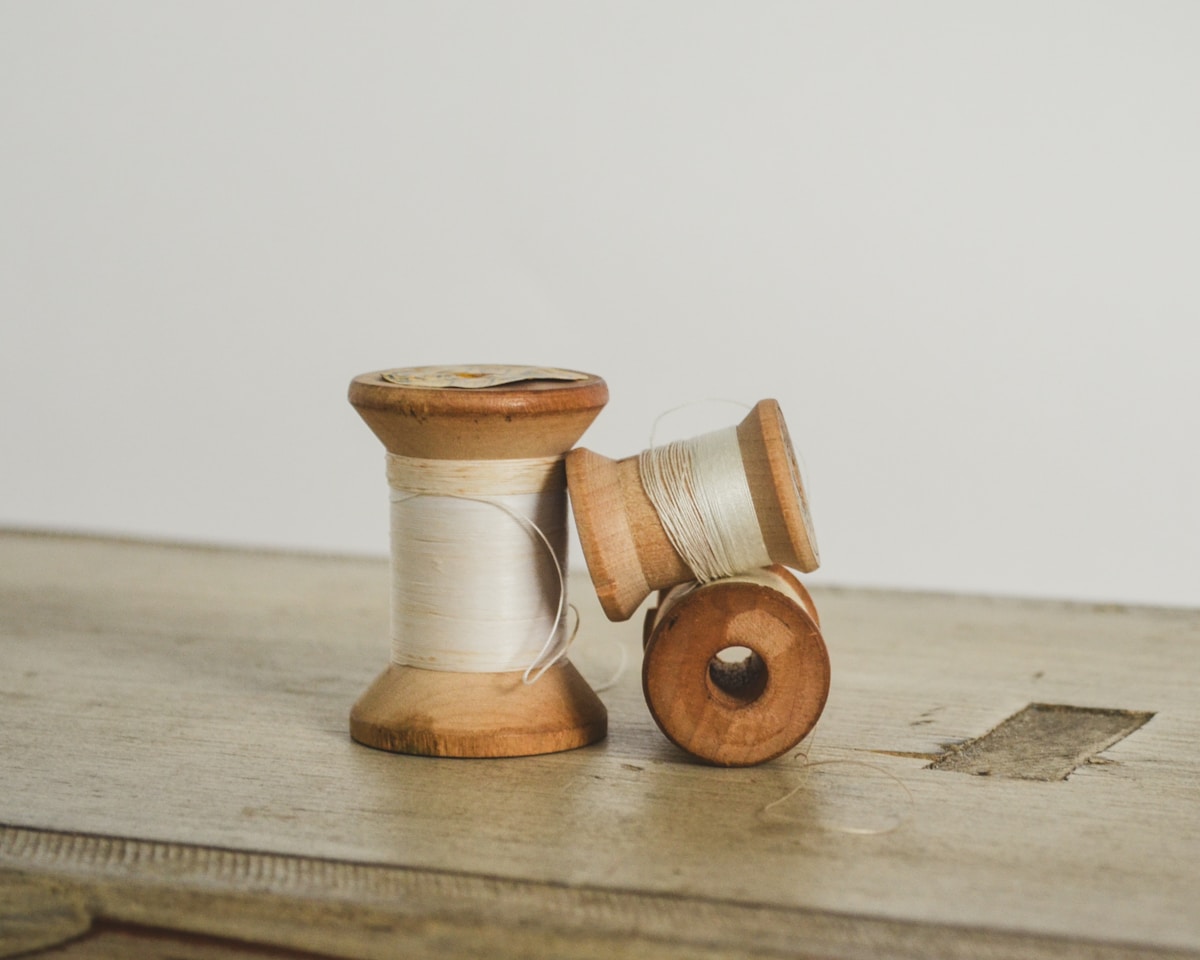
Venetian needle lace, worked entirely by hand over parchment patterns, gave guipure lace its first identity in 16th-century Venice, long before any French atelier claimed the craft. That original form used twisted silk and cartisane, a narrow strip of vellum wrapped in silk or metallic thread, to build motifs connected by sturdy bridges rather than any mesh ground.
The absence of that background net is precisely what makes guipure structurally distinct: think of it as architecture rather than fabric, each floral or geometric motif standing independently, held in place by coarse plaits alone.
The Original Bobbin Lace vs. Modern Embroidery Guipure
The terminology shifted considerably over the 19th century. Historically, guipure denoted a continuous bobbin lace with no delicate grounding; today, the term is applied broadly to large-patterned heavy embroideries where a tulle base is chemically dissolved after the design is set, leaving a free-standing textile weighing between 70 and 400 g/m².
That is roughly two to three times heavier than Chantilly lace, which explains why guipure naturally suits structured lingeries, bodices, and corsetry rather than delicate drape.
How French Ateliers Kept the Craft Alive
Northern France, particularly the Calais region, became the global guardian of this tradition through mechanised Leavers looms capable of reproducing the dense, bridged structure at scale without sacrificing the sculptural relief. That regional expertise is why "French handcrafted" remains a genuine value signal for the 25-45 urban demographic today, not merely a marketing phrase.
Lola Luna Lingerie carries this lineage forward from its workshop near Avignon, handcrafting each piece since 1975 using noble materials that honour five centuries of accumulated savoir-faire.
For women who seek that same depth of craft in their everyday wardrobe, the finest sous-vêtement femmes share one quality: materials chosen for their history, not their convenience.
Guipure Lace vs. Other Laces, the Criteria That Actually Matter
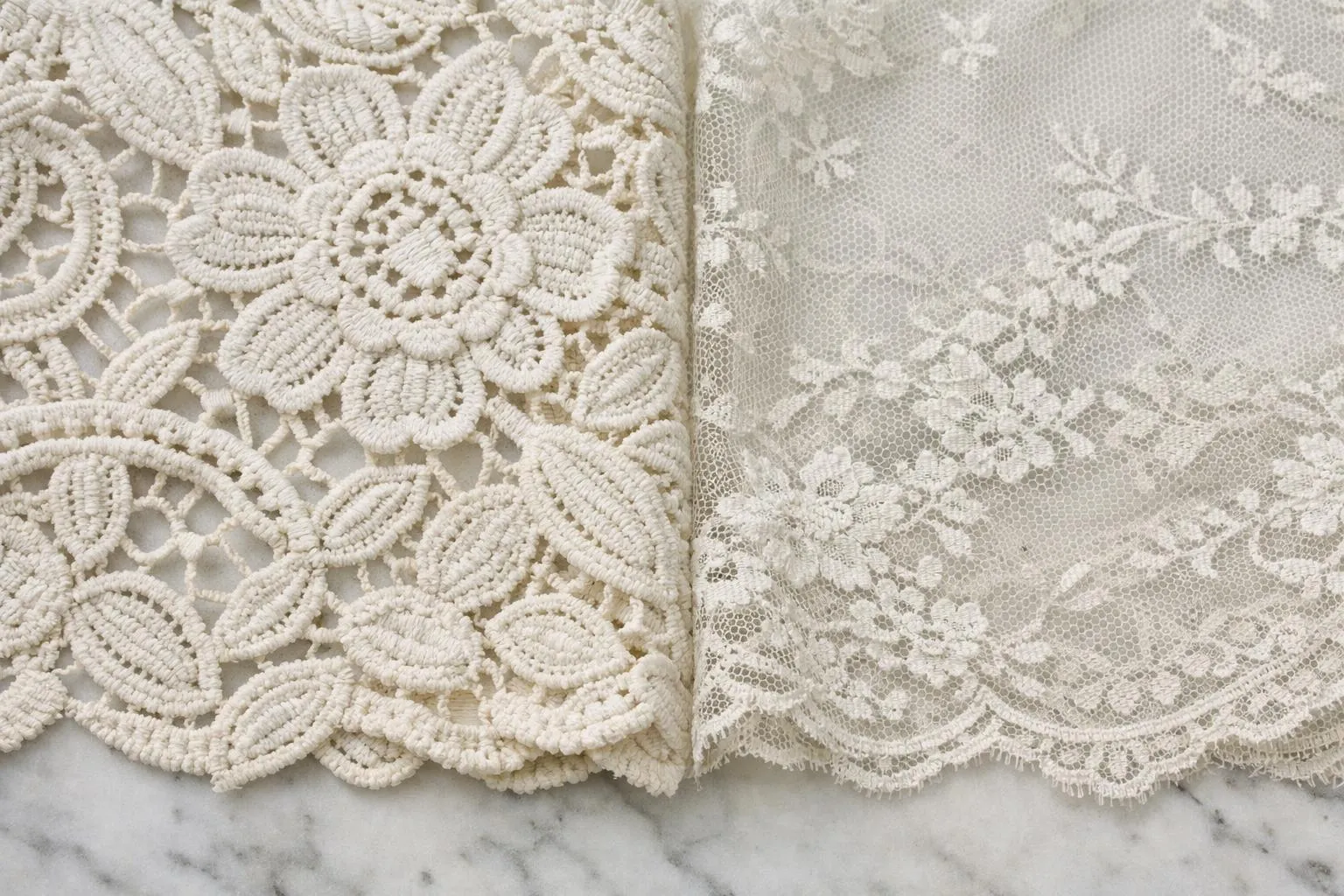
The choice between guipure lace, Chantilly, and Calais lace is not a matter of preference, it is a structural decision with direct consequences for how a garment falls, holds, and reads at a distance. Guipure weighs between 70 and 400 g/m², while Chantilly sits considerably lighter at 30 to 180 g/m².
That weight difference alone determines whether a piece drapes softly against the skin or stands with architectural presence.
Structure, Weight, and Drape Compared Side by Side
| Criterion | Guipure Lace | Chantilly Lace | Calais Lace |
|---|---|---|---|
| Weight | 70-400 g/m² | 30-180 g/m² | Variable, mesh-supported |
| Background mesh | None, open motifs | Fine tulle ground | Continuous mesh ground |
| Application method | Appliqué or structured panel | All-over coverage | All-over coverage |
| Visual impact | Bold, sculptural | Delicate, romantic | Refined, continuous pattern |
| Best use | Bodices, structured corsets | Flowing overlays, lingerie | Full-coverage lingerie pieces |
When to Choose Guipure Over Chantilly or Calais Lace
Guipure's free-standing motifs, connected by bridges rather than woven into a mesh, make it the natural choice when the fabric itself must carry visual weight. For structured bodices or statement lingerie pieces where the design needs to read clearly, guipure delivers.
Calais lace, with its continuous mesh ground, suits all-over coverage and wraps the body more fluidly. Chantilly, the lightest of the three, favours romantic drape and softness over bold definition.
Color range is no longer a limiting factor. Contemporary guipure now extends well beyond ivory and white into oak beige, deep green, and rich neutrals, making it relevant for bridal couture and everyday luxury alike.
When selecting the quelle couleur de lingerie pour ma peau guide, the tone of the guipure itself becomes part of the decision. For those seeking the best lingerie for my wife, a guipure piece in a considered neutral reads as a considered, lasting gift.
Lola Luna Lingerie tip: When choosing between lace types, consider the garment's purpose first. For a piece intended to be seen as a statement, worn as much as displayed, guipure's sculptural boldness is unmatched.
For softness against the skin across the full silhouette, Calais lace remains the more forgiving choice.
What Luxury Lingerie Brands Won't Tell You About Guipure Lace
The label says "guipure lace." The price suggests luxury. What it rarely tells you is whether the embroidery was chemically dissolved from a tulle base, the mark of genuine craftsmanship, or simply bonded synthetic fibers pressed into a lace-like pattern.
That distinction changes everything about how a garment feels, drapes, and endures.
The Quality Signals Most Shoppers Miss
Authentic guipure lace motifs are raised and three-dimensional, with a soft hand that yields slightly under pressure. Flat, rigid patterns with uniform stiffness across the entire surface are a reliable indicator of shortcuts taken during production.
Fiber composition is equally telling: couture-grade textile suppliers increasingly offer 100% cotton guipure with a loose weave, a material that breathes naturally against the skin and holds its structure without chemical stiffeners. When a piece contains elastane, the minimum threshold for genuine stretch guipure is 5% integrated directly into the embroidery thread, below that, the fabric risks snapping under normal movement.
Why Origin and Material Composition Change Everything
French ateliers maintain tighter quality control over thread tension and motif density than mass-market suppliers, which is why provenance remains one of the most reliable quality signals available. At Lola Luna Lingerie, guipure and Calais lace are sourced exclusively from premium French suppliers, ensuring each handcrafted piece produced in the workshop near Avignon meets couture standards, not approximate ones.
Before purchasing any luxury piece described as guipure, consider these verification points:
- Request fiber composition: 100% cotton or silk indicates couture grade
- Check elastane content: at least 5% for stretch garments to prevent snapping
- Assess motif relief: raised and sculptural, never flat or uniformly stiff
- Confirm workshop origin: French ateliers offer the most rigorous thread and density standards
For those drawn to the heritage of French luxury craftsmanship, our guide on lingerie united kingdom explores why discerning shoppers across borders continue to seek out precisely this standard of making.
How Guipure Lace Reshape a Lingerie Piece Into a Precious Object
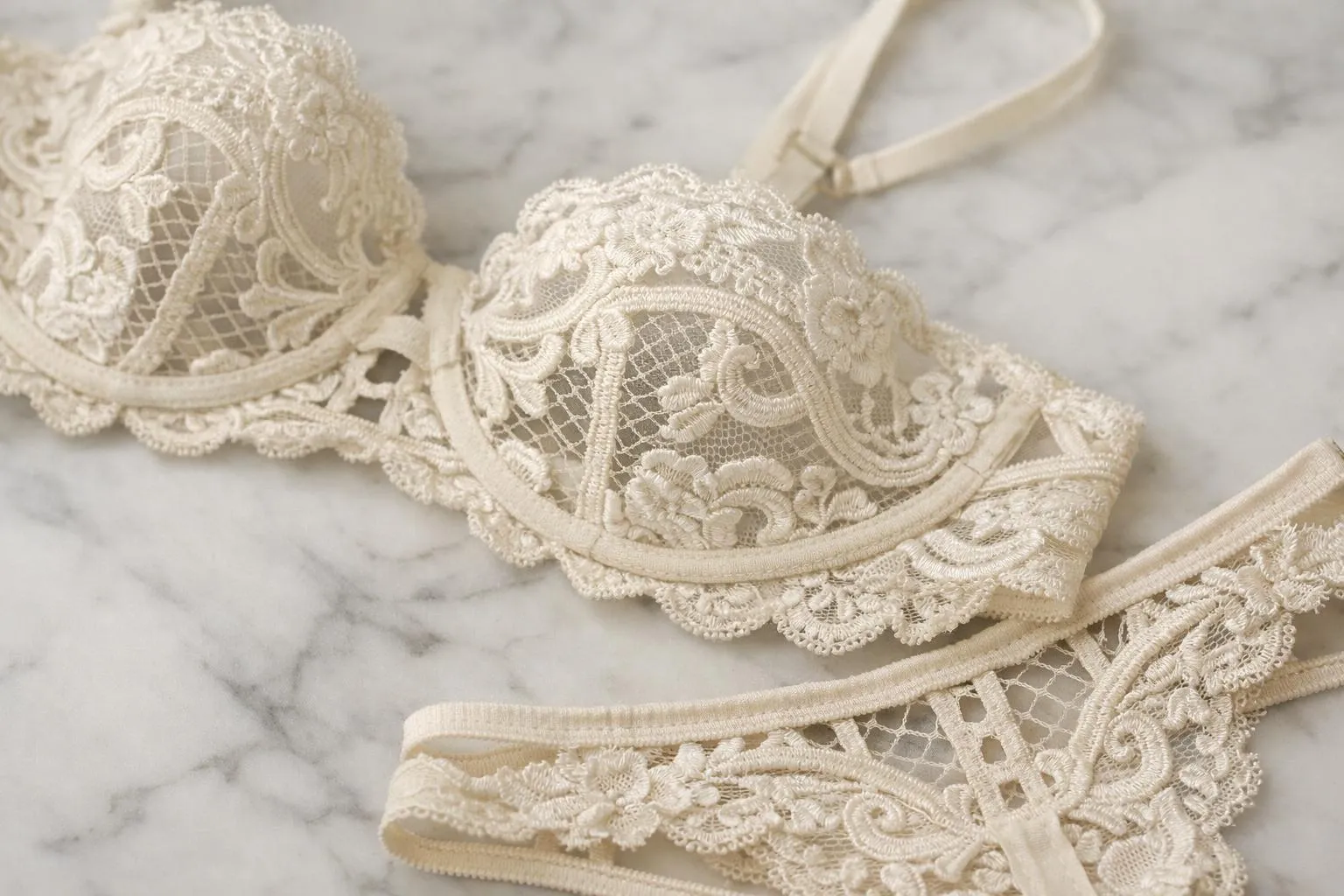
Guipure lace does something no other textile achieves: it turns intimate wear into something you might frame. Weighing between 70 and 400 g/m², its sculptural motifs stand completely free of any background mesh, creating a bold, architectural presence that reads as jewellery against the skin.
Where Chantilly whispers, guipure lace declares. That structural confidence is precisely why it lift a lingerie set from seasonal purchase to heirloom object.
Styling and Wearing Guipure Lingerie with Confidence
The graphic silhouette of guipure rewards visibility. Worn beneath a sheer blouse or an open-back dress, the raised motifs become a deliberate fashion detail rather than a concealed layer.
Lola Luna Lingerie's lace and silk lingerie sets are crafted precisely for this dual life: impeccably intimate, yet composed enough to surface as part of a considered look.
Caring for Guipure Pieces to Preserve Their Structure
Because guipure's motifs are free-standing embroideries rather than woven into a continuous ground, the structure is unforgiving of rough handling. Follow these four rules without exception:
- Hand wash in cold water with a gentle, pH-neutral detergent
- Never wring, press softly between two clean towels
- Lay flat to dry; hanging distorts the motif bridges
- Store flat or loosely rolled, never folded under pressure
Treated with this care, a guipure piece retains its raised, sculptural integrity for years. That longevity is the quiet argument for investing in handcrafted quality, the kind Lola Luna Lingerie has refined in its Avignon workshop since 1975.
Frequently Asked Questions
Is guipure lace the same as regular lace?
Not quite. Guipure is a specific type of lace distinguished by its raised, three-dimensional motifs and the absence of a net background, each motif connects directly to the next, creating that unmistakable sculptural appearance.
Regular lace typically relies on a fine mesh ground to hold the pattern together. Guipure stands entirely on its own structure, which is why it feels so substantial and luxurious against the skin.
What is guipure lace made of?
Traditionally, guipure lace is crafted from cotton, silk, or viscose threads woven into complex patterns using a Venetian or chemical lace technique. The motifs are constructed independently, then joined by bars or brides rather than a mesh backing.
At LolaLuna Lingerie, the materials we select for our lace pieces are chosen for their hand, their weight, and their ability to hold a precise pattern over time, because craftsmanship begins with the thread itself.
Why is guipure lace used in luxury lingerie?
Because it cannot be rushed. The structured, relief motifs of guipure demand precision at every stage of production, from the initial weaving to the careful placement on a garment.
The result is a piece that reads as genuinely artisanal rather than mass-produced. It drapes differently, catches light differently, and ages with considerably more grace than standard stretch lace.
For a house like LolaLuna Lingerie, working with guipure is a deliberate choice rooted in a half-century of French savoir-faire.
How do I care for guipure lace garments?
Hand wash in cool water with a gentle, pH-neutral detergent. Never wring or twist the fabric, press it softly between two clean towels to remove excess water, then lay flat to dry away from direct sunlight or heat sources.
Machine washing, even on a delicate cycle, risks distorting the three-dimensional motifs that define guipure's character. Store folded rather than hung to preserve the structure of the lace over time.
Treated with care, a well-made guipure piece will remain beautiful for years.
What colors does guipure lace come in?
Ivory and black are the classics, and with good reason. Both allow the sculptural motifs to read with full clarity, which is precisely where guipure's beauty lies.
Beyond those two, guipure is produced in a range of tones from blush and nude to deep wine and midnight navy, depending on the collection. At LolaLuna Lingerie, colorways are selected seasonally to complement the natural warmth of silk and the refinement of the overall design.
How can I tell if guipure lace is high quality?
Look closely at the motifs: crisp, even edges and a consistent relief indicate skilled production. Poor-quality guipure shows fraying threads at the joins, motifs that flatten under light tension, or a stiff synthetic hand that lacks the subtle give of natural fibers.
In practice, I've found the most reliable test is simply to hold the piece up to light. High-quality guipure reveals a coherent, intentional pattern with no irregular gaps or pulled threads.
The weight should feel considered, present without being heavy. That balance is the mark of lace worth investing in.
Guipure Lace, Where Craft Becomes Legacy
What separates guipure lace from every imitation is not a pattern or a price point, it is the refusal to cut corners in a world that rewards speed over substance.
The natural next step is to feel that difference directly. Browse the Lola Luna Lingerie handcrafted collections and examine how each piece carries the weight of French savoir-faire, from the open-mesh structure of the lace itself to the finishing details that only a workshop near Avignon, working since 1975, knows how to execute.
Lola Luna Lingerie crafts each piece by hand using noble materials, including authentic Calais lace, so that the woman wearing it never has to wonder whether the quality is real.
True luxury is not worn. It is recognized, by those who know exactly what to look for.

