


Luxury Lingerie vs Mass Market, The Insider's Guide
Posted by LOLA LUNA'S TEAM

In the lingerie luxe vs grande distribution debate, the real difference isn't just price, it's construction, fabric sourcing, and how long a piece actually lasts.
- Luxury lingerie uses hand-finished details and premium fabrics (silk, Leavers lace) that mass-market alternatives rarely match
- Invest in luxury pieces for everyday silhouettes you wear closest to your skin, comfort and longevity justify the cost
- Mass-market works for trend-driven pieces you'll rotate quickly; luxury earns its place in a assemble, lasting wardrobe
Most women have made this mistake at least once: paying less, then replacing the same piece three times over.
The lingerie luxe vs grande distribution question sits at the heart of how sophisticated women are rethinking their wardrobes, not as a collection of items, but as a set of deliberate choices about quality, longevity, and how fabric feels against skin at six in the morning.
Even if price is the obvious dividing line, the more interesting gap lies in what you can't see at first glance: the cut, the thread count, the way elastic behaves after a dozen washes.
This guide cuts through the marketing noise to give you a clear, honest framework for deciding when luxury is worth every euro, and when it simply isn't.
Why the lingerie luxe vs grande distribution Debate Has Never Mattered More
The question is no longer simply about price. The lingerie luxe vs grande distribution divide has become a genuine values statement, and the market data makes the stakes impossible to ignore.
However, Global luxury lingerie was valued at approximately 12.4 billion dollars in 2025, with forecasts pointing toward 21.8 billion dollars by 2034 at a 6.5% annual growth rate. Europe alone commands 38% of that global demand.
While the broader French lingerie market sits at roughly two billion euros, under measurable pressure from mass retail channels competing on volume and convenience.
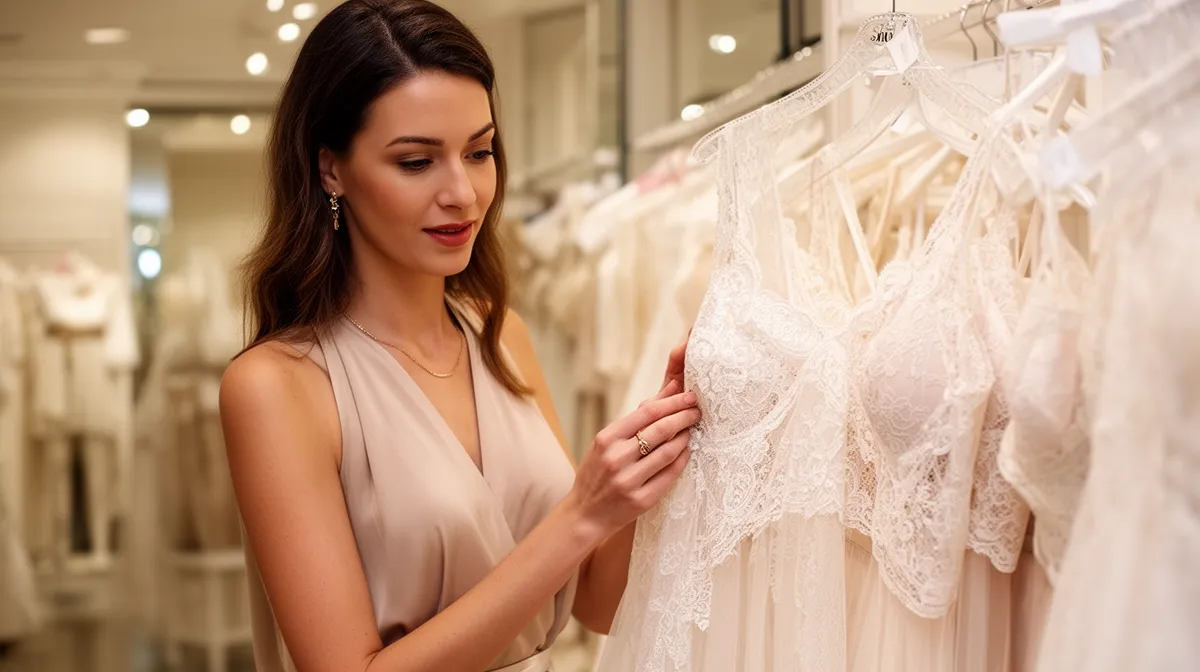
A $12 Billion Market Tells the Story
| Segment | Price Range | Strengths | Limitations |
|---|---|---|---|
| Luxury lingerie (e.g. Lola Luna Lingerie) | €42, €110 | Handcrafted quality, premium materials, exclusivity, French origin | Higher investment per piece, selective distribution |
| Grande distribution | €5, €25 | Wide availability, low price point, broad size range | Standardised production, limited brand identity, fast-fashion lifecycle |
How Women's Expectations Have Shifted
Consumers are actively reconsidering disposable purchases. Therefore, Direct-to-consumer online channels now reward brands with a traceable story, craftsmanship, provenance, materials, over sheer convenience.
For discerning women aged 25 to 45, the calculation has shifted: one enduring piece from a French atelier outweighs three forgettable ones from a supermarket shelf. That shift is precisely where Lola Luna Lingerie, handcrafted near Avignon since 1975, holds a structural advantage that no mass retailer can replicate.
Head-to-Head Comparison: Luxury Lingerie vs. Mass-Market in 5 Dimensions
Because Europe accounts for roughly 38% of global luxury lingerie demand, a market segment that behaves by entirely different rules than grande distribution. The gap is not merely about price.
It is structural, material, and experiential. Although Before the table, the verdict: on every axis that matters to a discerning buyer, handcrafted luxury wins decisively, though the entry cost is real.
Understanding why requires measuring both sides honestly.
| Dimension | Luxury (LolaLuna Lingerie) | Mass-Market / Grande Distribution |
|---|---|---|
| Materials | Calais lace, silk, embroidered tulle, noble fibres with tactile integrity | Synthetic blends (polyester, elastane) optimised for volume output and low cost |
| Craftsmanship | Handcrafted near Avignon, each piece individually assembled and inspected | Factory-scale assembly lines; consistency through automation, not artisan skill |
| Price range | Sets €98-€110; thongs €42-€59 | Comparable sets €20-€35; basics under €10 |
| Brand experience | Signature luxury packaging, limited production runs, exclusive distribution | Mass availability, standardised packaging, ubiquitous SKUs across all channels |
| Sustainability | Controlled French production, traceable materials, lower volume waste | High-turnover model generates meaningful textile waste; supply chain opacity |
Materials, Craftsmanship, and Longevity
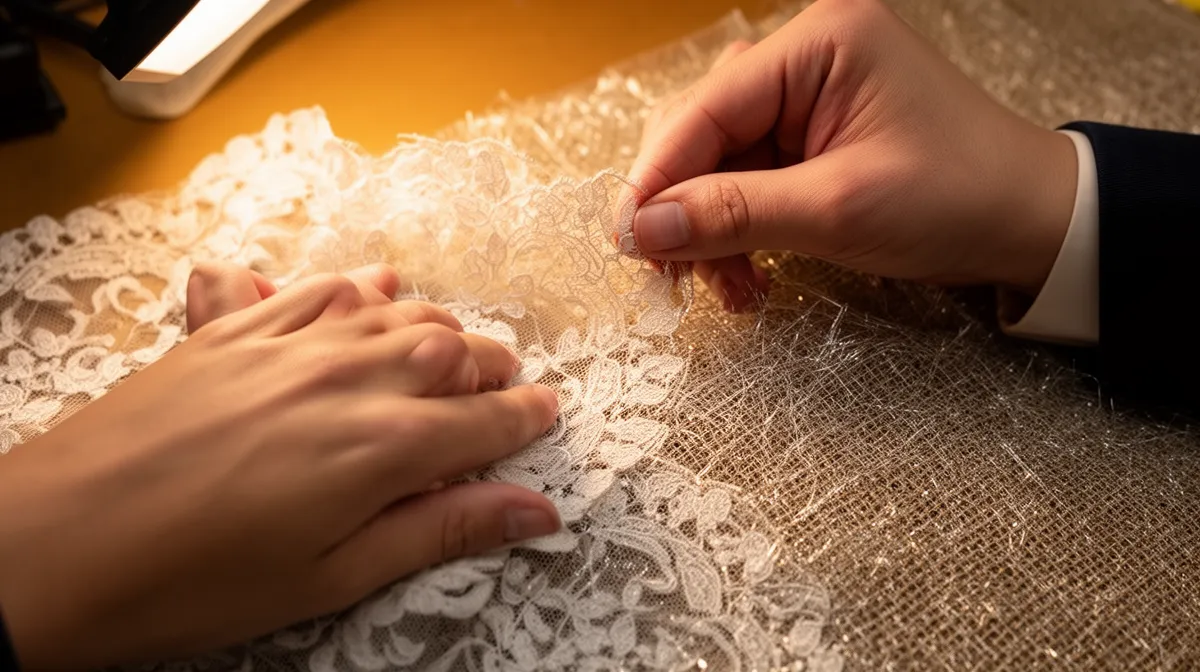
Calais lace is not simply decorative. It is woven on Leavers looms, a process so precise that production speed is measured in centimetres per hour, not metres per minute.
While Synthetic alternatives, by contrast, are engineered for throughput. The structural consequence is measurable: noble fibres retain shape and softness through repeated wear, while synthetic blends degrade noticeably within months.
For the full range of sous-vêtement femmes that genuinely endure, material origin is the deciding factor.
Price, Perceived Value, and Cost-Per-Wear
A LolaLuna Lingerie set at €98-€110 looks expensive beside a €25 mass-market equivalent. Since The cost-per-wear calculation reverses that impression entirely.
A luxury piece worn twice weekly for two years costs roughly €1 per wear. The €25 alternative, replaced after six months, costs more per occasion and contributes to the textile waste cycle that the lingerie shooting boudoir haut de gamme aesthetic actively rejects.
The mechanism is simple: premium materials resist degradation because their fibre structure is denser, less prone to pilling, and maintains elasticity far longer than synthetic weaves.
Whereas The rarity factor compounds this value. Grande distribution competes on volume and convenience, wide assortment, immediate availability, low friction.
Luxury lingerie inverts this logic deliberately. Thus, Limited runs, selective distribution, and signature packaging overhaul each purchase into an event rather than a transaction.
That distinction is not marketing language. It is the structural reason why the global luxury lingerie segment is projected to nearly double by 2032, even as the broader French lingerie market faces pressure.
What the Lingerie Industry Won't Tell You About Mass-Market Quality
Finally, The French women's lingerie market reached just over two billion euros in 2025, yet a significant share of that spend is quietly wasted on pieces engineered to fail. Mass-market lingerie is not designed for longevity; replacement cycles drive revenue.
The industry's open secret in the lingerie luxe vs grande distribution debate is that affordability is largely an illusion built on planned obsolescence.
The Hidden Cost of Cheap Lingerie
Synthetic fabrics, polyester, nylon blends, cost less to source, which is why grande distribution relies on them. Additionally, However, they trap heat, resist breathability, and degrade noticeably after repeated washing.
In contrast, the Calais lace and silk used by Lola Luna Lingerie age gracefully, retaining structure and softness across years of wear. For women who value size 14 lingerie that genuinely fits and endures, material origin is not a luxury detail, it is the deciding factor.
Why 'Affordable' Rarely Stays Affordable
Meanwhile, The calculation breaks down fast. A €25 mass-market bra replaced four times per year costs €100 annually, and delivers inconsistency, because last season's fit is discontinued by design.
A Lola Luna Lingerie piece priced between €42 and €59 lasts three or more years: roughly €15 to €20 per year. As a result, Concretely, that is the cost of a single café visit per month for craftsmanship that compounds in value rather than degrading in a drawer.
| Segment | Typical Price | Strengths | Limitations |
|---|---|---|---|
| Grande distribution | €15, €30 | Wide availability, trend-responsive assortment | Short lifespan, synthetic fabrics, opaque supply chain |
| Mid-range specialty | €40, €70 | Better fit, some natural materials | Variable craftsmanship, limited traceability |
| Lola Luna Lingerie | €42, €110 | Handcrafted in France, Calais lace and silk, transparent origin | Selective distribution, premium entry price |
Supply-chain opacity is the final hidden cost. Mass production offers no traceability; informed buyers increasingly demand to know where and how their garments are made.
The lingerie shooting boudoir haut de gamme aesthetic that defines Lola Luna Lingerie reflects a philosophy of fewer, better pieces, each one accountable from workshop to wardrobe.
Lola Luna Lingerie tip: Before your next purchase, calculate your annual cost per wear rather than the sticker price. On the other hand, A handcrafted piece worn consistently for three years almost always outperforms four disposable replacements, in comfort, in appearance, and in total spend.
How Lola Luna Lingerie Redefines What Luxury Feels Like
While the broader underwear sector contracted by 5.8% in value in 2023 according to Kantar, demand for handcrafted luxury pieces held firm, because women investing in quality are not buying a garment. They are buying a ritual.
That distinction is precisely where lingerie luxe vs grande distribution diverges most sharply, and where LolaLuna Lingerie has built its identity since 1975.
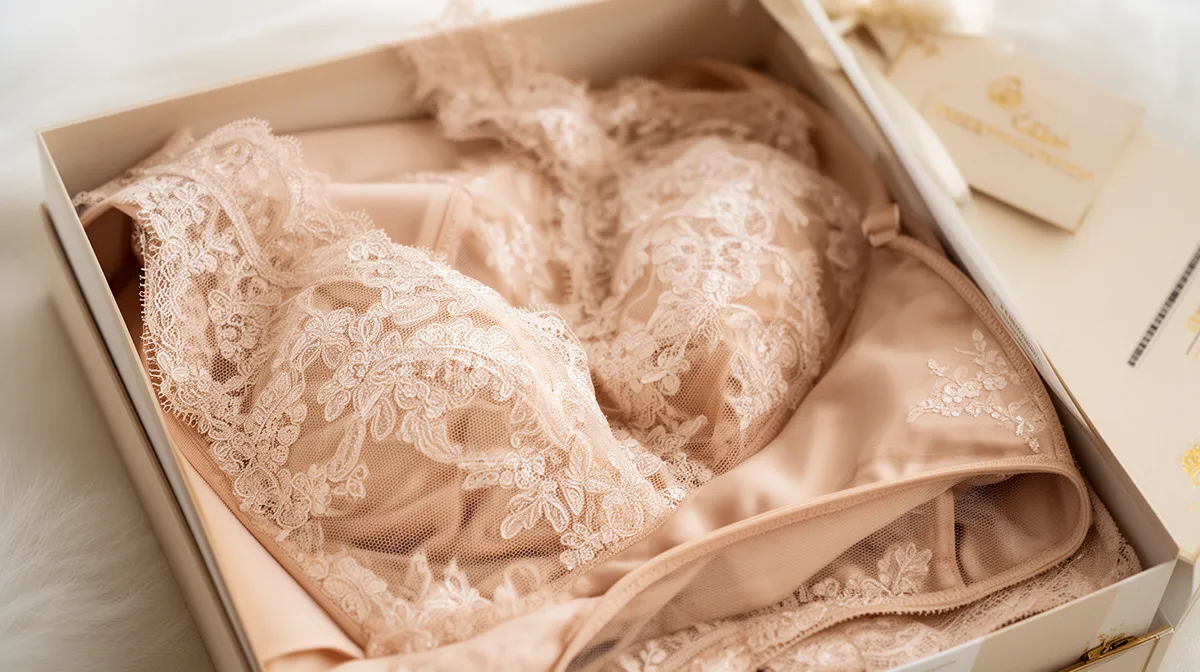
From Packaging to Purchase, the Ritual of Luxury
For example, The signature box changes everything. Where mass-market retailers deliver folded polyester in a plastic sleeve, LolaLuna Lingerie encloses each piece in its signature luxury packaging, transforming the moment of opening into a ceremony.
For the urban woman aged 25 to 45 who allocates €500 or more to her wardrobe, that unboxing is not incidental. Above all, It is the first tactile proof that what she chose is genuinely different.
Choosing the right piece starts well before purchase, our guide on quelle couleur de lingerie pour ma peau shows how intentional that process can be.
Craftsmanship Since 1975, Why Heritage Changes Everything
Five decades of refined technique in the Avignon workshop are not a marketing claim. They are a structural advantage that factory-scale production simply cannot replicate.
Nonetheless, Each stitch is placed by a skilled hand, each piece cut from Calais lace or silk chosen for its weight and drape. The mechanism is straightforward: consistent human oversight at every stage means defects are caught before they leave the workshop, not after they reach the customer.
| Dimension | LolaLuna Lingerie (luxury) | Grande Distribution |
|---|---|---|
| Price range | €42, €110 | €8, €30 (typical) |
| Materials | Calais lace, silk, embroidered tulle | Synthetic blends, standard cotton |
| Production | Handcrafted, Avignon workshop | Industrial, high-volume factories |
| Packaging | Signature luxury box | Standard retail packaging |
| Brand identity | Heritage since 1975, made in France | Volume-driven, seasonal trends |
Wearing LolaLuna Lingerie is a sensory experience that synthetic alternatives cannot match, the cool weight of silk against skin, the precise fit of hand-cut lace. Subsequently, For a woman who treats her wardrobe as an extension of identity, that difference is felt immediately and remembered long after the purchase.
Verdict, which Should You Choose and Why Luxury Wins on Every Long-Term Measure
With the global luxury lingerie market projected to reach over 34 billion dollars by the late 2020s, consumer demand is clearly shifting toward quality over volume. The lingerie luxe vs grande distribution question, for a woman who values longevity and identity, has a straightforward answer: luxury wins.
Not on impulse, but on every measure that compounds over time.
The Smart Investment Case for Luxury Lingerie
| Option | Price Range | Strengths | Limitations |
|---|---|---|---|
| Lola Luna Lingerie set (lace & silk) | €98-€110 | Handcrafted in France, premium Calais lace, years of wear, signature packaging | Higher upfront investment |
| Lola Luna Lingerie thong (Calais lace) | €42-€59 | Accessible entry into luxury, recognizable craftsmanship, ideal first piece | Single item, not a full set |
| Mass-market equivalent (grande distribution) | €12-€25 | Low cost, wide availability | Synthetic materials, short lifespan, no brand story |
How to Start Building a Considered Lingerie Wardrobe
However, A wardrobe of five to seven carefully chosen pieces consistently outperforms a drawer crowded with mass-market items. Begin with a Lola Luna Lingerie lace and silk set, the equivalent investment of four mass-market replacements, but one that lasts years rather than months.
Then add Calais lace thongs as versatile foundations.
- Start with one foundational set (€98-€110) as your quality benchmark
- Add two to three Calais lace thongs (€42-€59) for daily luxury
- Explore the full collection online or in-boutique, each piece arrives in the signature box
Every Lola Luna Lingerie delivery is itself an experience, which is precisely what grande distribution cannot replicate.
FAQ - Frequently Asked Questions
What is the real difference between luxury lingerie and grande distribution in terms of materials?
The gap is wider than most people expect. Therefore, Mass-market pieces typically rely on synthetic lace produced at scale, where the pattern is printed or bonded rather than woven.
Luxury lingerie, by contrast, uses materials like Calais lace, which is crafted on century-old Leavers looms in northern France, and silk with a verified momme weight. These are not cosmetic upgrades, they change how the fabric drapes, breathes, and ages entirely.
Is luxury lingerie worth the higher price compared to mass-market brands?
Because Yes, though the honest answer depends on what you value. A mass-market thong at €12 and a handcrafted lace piece at €45 are not competing on the same terms.
One is a consumable. Although The other is a garment with structural integrity, considered proportions, and materials selected for their feel against skin rather than their cost per metre.
At LolaLuna Lingerie, every piece is made by hand near Avignon, which means the price reflects actual craft time, not a brand premium applied to a factory product.
For women who wear lingerie as a daily ritual rather than an afterthought, that distinction matters enormously.
How long does luxury lingerie last compared to mass-market alternatives?
A well-maintained luxury piece outlasts its mass-market equivalent by years. With proper hand washing and careful storage, Calais lace and silk hold their structure far longer than synthetic alternatives that pill, lose elasticity, or fade after a dozen washes.
The cost-per-wear calculation often surprises people once they run the numbers honestly.
What makes handcrafted lingerie different from factory-produced pieces?
While Factory production optimises for consistency at volume, every stitch is automated, every seam calculated for speed. Handcrafted work operates on a different logic entirely.
At LolaLuna Lingerie, each piece passes through skilled hands in our workshop, which means proportions are adjusted, lace is positioned with intention, and finishing details receive individual attention. Since I've personally seen the difference this makes in how a garment sits on the body, factory pieces are sized, handcrafted pieces are shaped.
That distinction is invisible in a product photo. It becomes very obvious the moment you put it on.
At what price point does lingerie qualify as truly 'luxury'?
Whereas Price alone is not the qualifier, positioning is. Some brands charge premium prices for average materials and heavy marketing spend.
That is not luxury; that is margin.
Genuine luxury lingerie starts where noble materials, skilled construction, and considered design converge. Thus, In practice, pieces using authentic Calais lace or weighted silk, assembled by hand, rarely fall below €40 for individual items and €95 for sets, which aligns with the LolaLuna Lingerie range running from €42 for lace thongs up to €110 for complete sets.
Below those thresholds, the material quality required simply cannot be sustained.
The lingerie luxe vs grande distribution Divide Comes Down to One Question Worth Asking Yourself
What you wear closest to your skin is the one choice that belongs entirely to you, and it shows in every thread.
The five dimensions covered here, materials, construction, longevity, fit, and creative integrity, consistently point in the same direction. Handcrafted French lingerie is not a premium for its own sake; it is a refusal to accept the disposable.
Lola Luna Lingerie has been making that refusal tangible since 1975, in a workshop near Avignon, with Calais lace and silk that outlast entire fast-fashion seasons.
Browse the current collection on the Lola Luna Lingerie website, each piece is listed with its materials and price range, so you can compare directly against what mass-market brands quietly omit from their labels.
A single well-chosen piece, crafted to last, will always outvalue a drawer full of replacements.

