


The World’s Smallest Thong Explained Through Design, Fit, Comfort, and Style
Publié par ROBOT-SPEED le

The world's smallest thong is not a verified global record or standardized product category. In practice, the phrase describes extremely minimal underwear or swimwear marketed with terms like micro-thong, micro-string, or G-string. It refers to a style approach rather than a measured competition.
French lingerie retailers use these terms inconsistently across brands and designs. DIM, for example, distinguishes a conventional string thong from a micro-thong, while other sellers apply "micro-string" to products with substantially different coverage. No shared dimensional threshold exists Construction details, front-panel size, rear width, and fabric choice matter more than the marketing label.
- Sizing and fit vary by brand: French lingerie typically uses numeric sizing mapped to EU sizes 36-48, with waist and hip ranges that differ across manufacturers.
- Material and comfort define wearability as much as minimalism: opaque microfiber, embroidered details, and stretch properties affect both function and feel.
What the World's Smallest Thong Really Refers To
The phrase functions as promotional language rather than a verified product category. French retailers use overlapping terms, including micro-thong, micro-string, G-string, and string thong, without consistent measurement standards.
No authoritative international body establishes minimum fabric area, width thresholds, or coverage levels that would permit an objective global ranking.
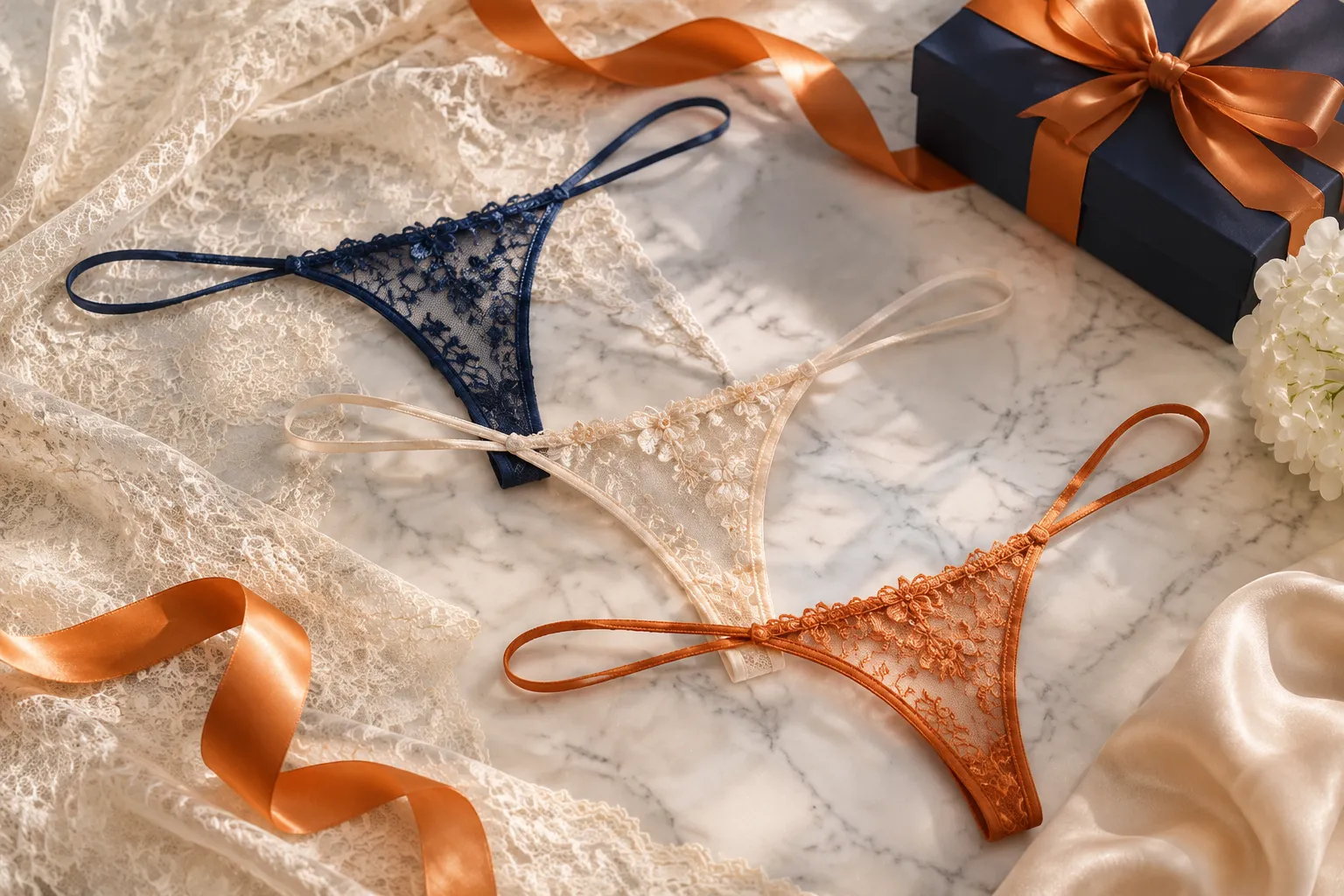
A Descriptive Label, Not a Verified World Record
Physical minimality and nominal size are separate concepts. A garment can feature very narrow construction while remaining designed for a broad size range.
Chantelle's Soft Stretch string adapts across French sizes 34-42 through high elasticity, illustrating that extreme cutout styling does not automatically mean the garment fits only small body measurements.
The available French evidence supports describing certain products as micro-strings or extremely minimal thongs. It does not support identifying any single item as objectively smallest worldwide.
Market listings provide descriptive language and size ranges but no standardized fabric-area ranking or independently verified record.
Why Minimal Coverage Changes the Lingerie Experience
Reduced fabric alters both the visual line and the physical sensation of wearing lingerie. A conventional thong features a wider front panel and fuller side bands; a micro-thong narrows these elements substantially, creating a sleeker silhouette under clothing and a more pronounced sense of exposure.
The difference is not merely aesthetic; construction, fit, and material quality become more consequential when coverage diminishes.
Minimal designs excel at eliminating visible panty lines, which appeals to wearers seeking seamless profiles beneath fitted garments. However, this advantage depends on precise fit and high-quality elastic.
Poorly constructed micro-thongs can shift or dig uncomfortably during movement, whereas thoughtfully engineered pieces from brands like Lola Luna Lingerie, crafted from Calais lace and silk, maintain support and comfort despite using less material. The smallest designs demand attention to construction detail that standard thongs can sometimes overlook.
The appeal of minimal coverage extends beyond practicality into personal confidence and aesthetic preference. Some wearers experience minimal lingerie as a statement of restraint and intentionality, a deliberate choice rather than a necessity.
Others find the sensation psychologically grounding, a form of deliberate exposure they control. Neither preference is universal; the experience depends entirely on individual comfort, the occasion, and how long the garment will be worn.
Duration and clothing matter significantly. A micro-thong designed for a few hours under a specific outfit may feel ideal; the same piece worn all day or under looser clothing may feel impractical.
The smallest designs work best when paired with intention: selecting them for defined moments rather than assuming minimal coverage suits every situation. Quality materials and expert craftsmanship ensure that when you do choose minimalism, the garment performs as intended.
How Construction Determines Coverage, Comfort, and Security
A thong's stability and comfort depend on the relationship between its front panel, gusset, rear section, and side bands. Each element distributes tension and determines how the garment sits against the body.
A front panel that is too narrow may shift during movement, while overly wide sides can create visible lines or pressure points. The rear section's width affects whether the garment stays in place or rides up, particularly during extended wear.
The Front Panel, Rear Width, and Side Structure
The front panel provides primary coverage, while the gusset ensures hygienic contact. In a minimal design, these two components may merge or be reduced to a narrow triangle.
Narrow side bands create a lighter visual footprint but require appropriate stretch and recovery to remain stable. Elastic that loses tension quickly will allow the garment to shift, while overly rigid elastic can dig into the skin.
The balance between elasticity and structure determines whether the thong moves with the body or relies on excessive tension to stay positioned.
Seam placement and finishing influence friction and smoothness beneath clothing. Flatlock seams lie flatter than overlocked edges, reducing the chance of rubbing or creating visible lines.
A poorly finished seam can irritate skin during movement, particularly where the rear strap contacts the body. The smallest visual footprint does not necessarily correspond to the least sensation on the body; a thong with minimal fabric but rough seams or inadequate stretch may feel more intrusive than a slightly larger design with refined construction.
Stretch, Seams, and Movement Throughout the Day
Comfort is individual and should be assessed through fit, movement, breathability, and length of wear. A garment that feels secure when standing may shift during walking, sitting, or bending.
Fabrics with four-way stretch adapt to these changes more effectively than rigid materials. Breathability depends on fibre composition and weave density; tightly woven synthetic fabrics may trap moisture, while natural fibres or mesh panels allow air circulation.
Assessing a micro-thong requires evaluating these construction details rather than relying solely on the garment's advertised size or coverage area.
How to Choose the Right Size Without Chasing the Smallest Fit
Selecting a micro-thong by size label alone frequently produces an uncomfortable or unstable result. A smaller nominal size does not create a more minimal garment; it adjusts the dimensions to match the wearer's measurements.
Choosing below your usual size compresses the waistband and side bands, causing them to dig into the skin, shift during movement, or fail to distribute tension evenly across the front panel and rear section.
French lingerie brands typically provide their own size guidance based on waist and hip measurements. Use these specifications rather than assuming that a smaller label will produce a closer fit.
When measurements fall between two sizes, choose the larger option to preserve comfort and stability throughout the day.
Signs of a Secure and Comfortable Fit
A properly fitted micro-thong should meet several observable conditions. The waistband and side bands lie flat against the skin without creating pressure points or visible indentations.
The front panel and gusset provide the coverage intended by the design without uncomfortable compression. During normal movement, including standing, sitting, walking, and bending, the garment remains in position without riding up, twisting, or requiring repeated adjustment.
Stretch improves adaptability but does not eliminate the need to select an appropriate size. A garment marketed as one-size or designed to span multiple standard sizes still requires sufficient elastic recovery to maintain its position.
Assess the fit in a private setting by moving through typical daily activities before wearing the garment for extended periods.
Discomfort, shifting, or the need for frequent repositioning indicates a sizing error rather than an inherent limitation of minimal lingerie under clothes. A well-fitted micro-thong functions as intended without compromising stability or requiring constant awareness.
Which Materials Make Minimalist Lingerie Feel More Refined
When fabric coverage decreases, material selection determines whether a micro-thong feels luxurious or coarse. Silk produces a smooth, refined hand feel that slides easily against the skin without catching.
Lace and embroidered tulle introduce texture and visual detail, transforming minimal coverage into an ornamental piece rather than a utilitarian garment. These materials work differently: silk prioritizes softness and drape, while lace emphasizes structure and pattern clarity.
Finishing quality becomes especially visible on extremely minimal designs. Seam edges, elastic casings, and joins between panels sit directly against the skin rather than beneath additional layers.
A rough edge or poorly secured thread creates immediate discomfort. Calais lace, handcrafted in French workshops, exemplifies careful finishing.
Its detailed patterns and refined edges remain stable during wear and laundering when properly constructed.
Silk, Lace, and Embroidered Tulle Compared
Silk offers breathability and a temperature-regulating surface, making it suitable for extended wear despite minimal coverage. Lace requires backing or reinforcement at stress points to prevent tearing, since its open construction lacks inherent strength.
Embroidered tulle combines transparency with decorative motifs, creating visual interest without adding significant weight. These materials feel distinct: silk conforms softly, lace holds its shape, and tulle provides semi-transparency.
Stretch elements support adaptability across body measurements. However, excessive stretch reduces structure, causing the garment to shift during movement.
The balance between elasticity and recovery determines whether a micro-thong maintains its position or requires constant adjustment. French lingerie makers often combine stretch panels at the sides with non-stretch materials at the front and rear to preserve both fit and form.
Lola Luna Lingerie produces lace and embroidered tulle thongs, silk and tulle micro-thongs, and lingerie sets using these premium materials. Each piece is handcrafted in the brand's workshop near Avignon.
Care instructions matter more for delicate constructions: lace, tulle, and silk require gentle handling and appropriate laundering to preserve their refined finish over time.
Frequently Asked Questions
Is "world's smallest thong" an officially recognized product category?
No. "World's smallest thong" is marketing language rather than a verified title or standardized category. French lingerie retailers use terms such as "micro-string," "tiny thong," and "micro G-string" to describe extremely minimal styles. These labels reflect design intent rather than an independently measured ranking.
When you encounter superlative claims, treat them as stylistic descriptions and focus instead on the garment's actual construction, materials, and intended coverage.
What is the difference between a micro-thong and a conventional thong?
A conventional thong provides rear coverage through a narrow central strip, while a micro-thong uses substantially less fabric and covers only a very small part of the intimate area. French retailer DIM distinguishes the two by their degree of coverage: a micro-thong reveals more and uses narrower bands.
The difference is visible in the width of the waistband, the size of the front panel, and the amount of material at the back. Neither style follows a uniform measurement standard, so visual inspection and sizing guidance remain your most reliable tools.
Does a smaller-looking thong provide less comfort?
Not necessarily. Comfort depends on fit, fabric choice, and seam placement rather than coverage alone.
A well-constructed micro-thong in soft, stretchy material may feel more comfortable than a poorly fitted conventional style. However, highly minimal designs reduce the surface area available for weight distribution, which can make the waistband or leg openings feel more pronounced during prolonged wear.
Check the fabric composition and try the garment during ordinary movement before committing to extended use.
How should I choose a size for highly minimal lingerie?
Follow the brand's size chart exactly. Minimal styles leave little room for adjustment, so accurate measurements of your hips and waist are essential.
When a garment is described as "one-size" or "adaptable," verify the stated size range before ordering. For example, some French designs accommodate sizes 34 to 42, but this flexibility depends on the fabric's stretch and the cut's proportions.
If you are between sizes, consider whether the style relies on elastic bands or ties for adjustment, and choose accordingly.
Which materials are commonly used in luxury minimalist thongs?
Calais lace, silk, and embroidered tulle appear frequently in premium micro-thongs. Calais lace is valued for its fine weave and durability, while silk offers a smooth finish and natural breathability.
Embroidered tulle adds decorative detail without adding weight. These materials require careful handling and gentle washing to preserve their structure.
Check the care label for specific instructions, as delicate fabrics may need hand washing or a protective laundry bag.
Can a micro-thong be worn comfortably under fitted clothing?
Yes, when the seams, edges, and waistband are designed to lie flat. Reduced rear coverage can minimize visible lines, but tight clothing will still reveal any raised seams or thick elastic.
Before wearing a micro-thong under form-fitting garments, check the garment's construction for smooth edges and test it under similar clothing at home. The front panel and leg openings matter as much as the back: a bulky or poorly finished front will show regardless of how minimal the rear is.
Can an ultra-minimal thong be worn every day?
It depends on your comfort threshold, the garment's fit, and the duration of wear. Some people find minimal coverage suitable for daily use, while others prefer it only for specific outfits or occasions.
Fabric choice matters: breathable materials such as silk or cotton blends are more comfortable over long periods than purely synthetic options. Start by wearing the garment for a few hours to assess stability and comfort before committing to all-day wear.
Will it show under clothing?
Reduced coverage can minimize visible panty lines, but the answer depends on the clothing's fit and the thong's construction. Tight dresses, leggings, or thin fabrics may still reveal seams, elastic bands, or raised embellishments.
Check the edges and waistband: smooth, laser-cut finishes are less likely to show than traditional stitched seams. Test the combination in natural light and from multiple angles before wearing it in public.
Is a micro-thong suitable for movement?
It can be, provided the garment stays in place during ordinary activities. Walk, sit, and bend while wearing the thong to confirm that the waistband does not shift and the fabric does not bunch.
Minimal designs rely on a precise fit rather than excess material to stay secure, so any looseness or slippage will be more noticeable than with conventional styles. Reserve the garment for situations where you can adjust it discreetly if needed, and avoid high-impact activities until you have confirmed its stability.
How should delicate materials be cared for?
Follow the care label instructions exactly. Lace, silk, and embroidered tulle typically require hand washing in cool water with a gentle detergent, though some may tolerate a delicate machine cycle in a mesh bag.
Avoid wringing or twisting the fabric, and lay the garment flat to dry away from direct heat. Store it in a breathable fabric bag or drawer compartment to prevent snagging.
Proper care preserves both the material's integrity and the garment's fit over time.
Does the smallest style suit everyone?
No. Coverage preferences and comfort levels differ, and highly minimal designs appeal to some people while feeling impractical or uncomfortable to others. A micro-thong is not inherently superior to conventional styles; it simply serves a different purpose.
If you value discretion under tight clothing and feel comfortable with minimal coverage, a micro-thong may be a useful addition.
Otherwise, a conventional thong or another style will serve you better.
How can a shopper compare styles?
Evaluate construction, materials, sizing guidance, and intended use rather than relying on superlative claims.
Check the finishing: smooth edges, reinforced seams, and quality elastic indicate better durability and comfort. Read the product description for guidance on fit and coverage, and compare it with your own preferences.
If the brand provides customer reviews or fit feedback, use that information to confirm whether the garment matches its description. Minimality alone does not determine quality or suitability.
Choosing Minimal Lingerie That Balances Style and Practicality
The available French market evidence supports describing certain products as micro-strings or extremely minimal thongs, but it does not establish a verified global ranking. Descriptions like "world's smallest thong" function as promotional language rather than independently measured categories.
When selecting minimal lingerie, prioritize construction quality, accurate sizing based on your measurements, and materials that remain comfortable during extended wear. A well-engineered micro-thong from Lola Luna Lingerie, handcrafted with Calais lace and silk in France, delivers both refined aesthetics and functional stability through careful attention to elastic tension, seam finishing, and fabric selection.

