


How to Wash Luxury Lingerie Without Ruining the Lace, Silk, or Delicate Embroidery
Publié par ROBOT-SPEED le

To wash luxury lingerie safely, always hand wash in cold water with a gentle detergent, never machine wash or tumble dry delicate lace or silk.
- Use cold water (under 30°C) and a pH-neutral lingerie detergent for every wash
- Press water out gently, never wring silk or Calais lace, which distorts the weave permanently
- Dry flat on a clean towel away from direct heat to preserve shape and embroidery
The first wash is where most luxury lingerie dies. Not from neglect, but from a single wrong decision: the machine cycle that seemed harmless, the spin that pulled a Calais lace motif apart at its most delicate thread.
Knowing how to wash luxury lingerie properly is, in practice, the difference between a piece that lasts years and one that unravels after a handful of wears. For handcrafted pieces like Lola Luna Lingerie's silk and Calais lace creations, where every detail is constructed to be worn and reworn, that knowledge matters more than most care guides admit.
Silk loses its sheen. Lace distorts.
Embroidery snags. Each fabric fails in its own specific way, and generic washing advice rarely accounts for the layered construction of truly premium lingerie.
What follows is a precise, material-by-material approach to keeping your most intimate investment exactly as it was on day one.
What you'll learn
- Why Washing Luxury Lingerie Wrong Is So Costly
- Step 1 — Gather What You Need Before You Start
- Step 2 — Hand-Washing Lace, Silk, and Embroidered Pieces
- Step 3 — Drying and Reshaping to Preserve Every Detail
- What Luxury Lingerie Care Brands Won't Always Tell You
Why Washing Luxury Lingerie Wrong Is So Costly
A single wash cycle at the wrong temperature can permanently destroy a piece that took skilled hands hours to craft. For garments built from Calais lace, silk, and embroidered tulle, the damage is often invisible until the piece is already unwearable.
Understanding exactly what goes wrong, and why, is the first step toward protecting your investment.

What Makes Luxury Lingerie So Fragile
Silk is a protein fibre. Heat above 30°C begins breaking down its molecular structure, causing irreversible loss of sheen and tensile strength.
Fine elastic, woven into waistbands and straps, loses its memory permanently when exposed to high temperatures. Calais lace and embroidered tulle are open, detailed constructions with almost no tolerance for mechanical stress.
These are not ordinary fabrics. They are precision textiles.
The Most Common Mistakes That Destroy Delicate Pieces
-
Wash above 30°C:
Heat denatures silk protein fibres and collapses elastic permanently. Industry consensus across luxury lingerie care guides sets 30°C as the absolute maximum. -
Use a standard machine cycle:
Agitation distorts lace patterns, snags embroidery threads, and stretches fine tulle beyond recovery. Hand-washing remains the default recommendation for all delicate trims. -
Apply harsh detergent:
Aggressive surfactants strip natural fibres, cause discoloration, and degrade the structure of silk. A mild, pH-neutral detergent is the only safe choice. - Wring or twist the fabric:
Mechanical pressure crushes lace structure and deforms cups or boning. Press water out gently, never twist.
For a LolaLuna Lingerie set priced between €98 and €110, one careless wash is not a minor inconvenience. It is the end of the piece entirely.
The care you invest costs nothing; the mistake costs everything.
Gather What You Need Before You Start
Calais lace motifs can be pulled apart permanently by a spin cycle, specifically because distortion happens at the weave's most delicate thread, not the fabric overall.
Washing luxury lingerie incorrectly can ruin delicate fabrics in a single cycle. Here is exactly how to hand wash high-end pieces safely, including the right water temperature, detergent, and drying method. Before a single drop of water touches your luxury g-strings or lace sets, having every element ready prevents the rushed decisions that damage fine fibres.
This preparation step takes under five minutes and protects pieces that represent a genuine investment in quality.
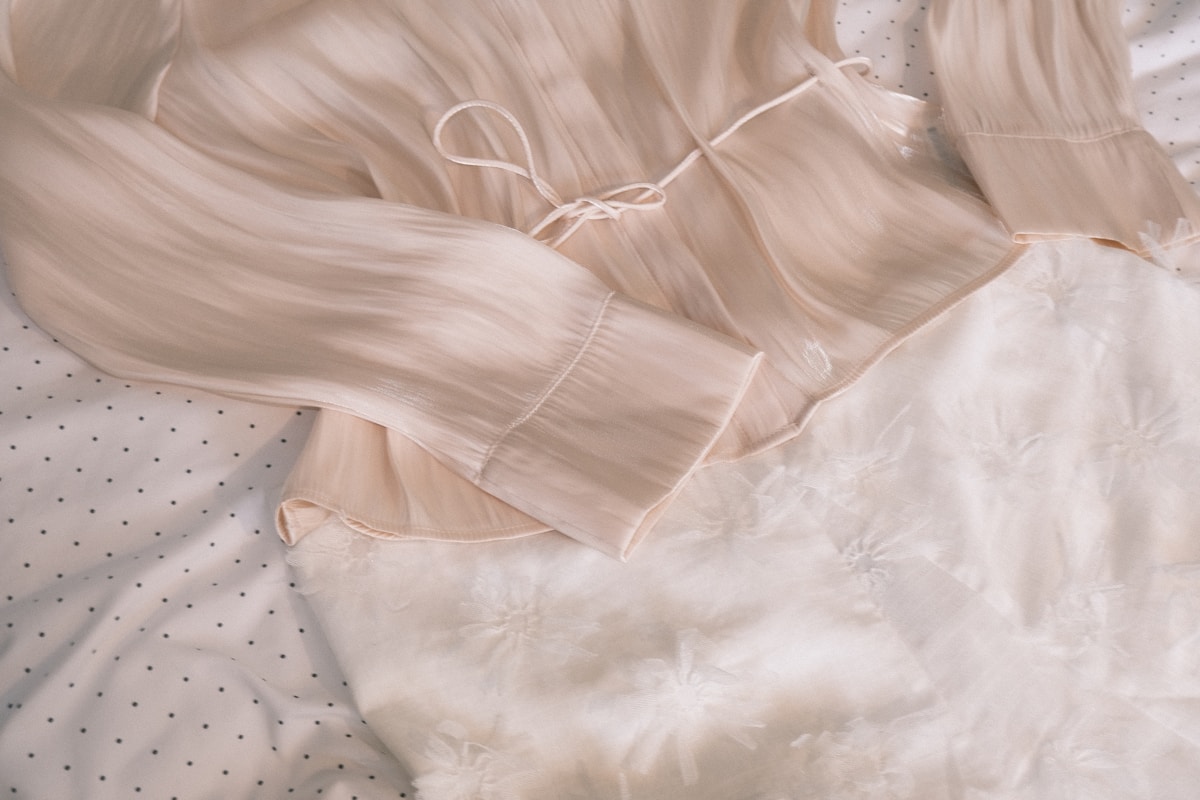
The Right Detergent for Silk and Lace
Standard detergent contains enzymes designed to break down organic matter, which means they actively degrade silk protein fibres and weaken the fine threads of Calais lace with each wash. Fabric softener compounds the problem by coating elastic fibres, reducing their tension over time.
Always choose a detergent specifically formulated for delicates or silk. Several luxury lingerie brands explicitly warn against both products, and the guidance from LolaLuna Lingerie follows that same industry consensus.
Tools That Protect Delicate Fabrics
Gather these before you fill the basin. For women's lingerie who value longevity, the setup matters as much as the technique itself.
-
Select a clean basin or sink
Never use a bucket that previously held cleaning products, residual chemicals transfer to fabric. A bathroom sink or large bowl works well. -
Fill with cool to lukewarm water, strictly below 30°C
Heat causes silk to shrink and lace to distort. Cool water preserves fibre structure and colour integrity. -
Add a small amount of delicate-specific detergent
A few drops are sufficient. Excess detergent is harder to rinse and leaves residue that stiffens embroidered tulle. - Lay out a clean dry towel and a flat drying rack
These must be ready before washing begins, pressing water out and moving immediately to flat drying prevents stretching while fibres are vulnerable.
Hand-Washing Lace, Silk, and Embroidered Pieces
The Correct Soaking and Gentle Agitation Technique
- Submerge the piece fully in cool to lukewarm water
Lower the garment into the basin slowly, allowing the fabric to absorb water evenly rather than forcing it under. Water should remain below 30°C, warmer temperatures distort elastic and weaken silk fibres irreversibly. Let the piece rest submerged for 10 to 15 minutes before touching it further. -
Agitate gently using only your fingertips
Move the fabric through the water with slow, circular fingertip motions. Never rub, scrub, or wring. For embroidered tulle, the rule is absolute: support the full panel with open palms and never pull individual threads, even lightly. -
Support lace panels throughout the entire process
Lace loses its structure when handled by its edges alone. Cradle the full lace section in your palm when lifting or repositioning, distributing the weight evenly. This single habit, recommended consistently across luxury lingerie care guides, prevents the distortion that makes lace appear aged after only a few washes.
How to Treat Stains Without Damaging the Fabric
Spot treatment requires restraint. Apply a single drop of mild detergent directly to the affected area only, then use one fingertip to work it in with the lightest possible dabbing motion.
Rinse that area with cool, clean water before proceeding with the full soak. Never rub the entire garment to address a localised stain, as the friction spreads damage far beyond the original mark.
Once soaking is complete, rinse thoroughly with cool, clean water until every trace of soap has gone. Residual detergent left in silk or lace stiffens fibres over time and dulls the fabric's natural sheen.
For artisanal lace lingerie in Avignon pieces crafted with structured embroidery, a second rinse is always worthwhile.
Lola Luna Lingerie tip: After rinsing, press water out by laying the piece flat on a clean dry towel and rolling it gently. Never twist or wring, as this distorts the cut and stresses the lace trim permanently. Pieces cared for this way retain their shape far longer, whether purchased in Paris or discovered through our lingerie in the United Kingdom collections.
Drying and Reshaping to Preserve Every Detail
This final stage is where most people unknowingly cause permanent damage. Wringing a wet lace thong or hanging a silk set to dry may feel intuitive; however, both actions deform elastic, stretch fine straps beyond recovery, and distort the very structure that makes a Lola Luna Lingerie piece worth treasuring.
The drying process deserves the same care as the wash itself.
How to Remove Excess Water Without Wringing
-
Press water out using a clean dry towel
Lay the freshly rinsed piece flat on a dry, absorbent towel. Fold the towel over the garment and press down gently with your palms, never twist or wring. This rolling-press method draws out excess water without applying the mechanical tension that deforms Calais lace or collapses embroidered tulle panels. -
Reshape cups, straps, and lace panels while still damp
Immediately after pressing, use your fingertips to coax structured cups back to their original form and smooth any lace panels flat. Damp fabric is pliable; once dry, distortions set permanently. This thirty-second step preserves the architecture of each handcrafted piece.
Air-Drying Flat for Perfect Shape Retention
- Transfer to a flat drying rack away from heat and sunlight
Lay the piece flat on a clean rack or fresh towel in a well-ventilated room. Direct sunlight degrades silk protein fibres and fades delicate dyes; heat sources accelerate elastic breakdown. A cool, shaded spot is all that is needed. -
Allow the piece to dry completely before storing
Storing lingerie while even slightly damp encourages mildew, which permanently damages fine fabrics. Patience here protects your investment. Once fully dry, fold gently and store flat rather than on a hanger, where the residual weight of moisture stretches fine straps over time.
Never use a tumble dryer. Heat is the single greatest threat to luxury lingerie: it melts elastic, degrades silk, and causes lace to pucker irreversibly.
For guidance on choosing pieces worthy of this level of care, explore our selection of lingerie gifts for her, each style crafted to reward exactly this kind of attention.
What Luxury Lingerie Care Brands Won't Always Tell You
Most care labels give you the minimum. What they rarely specify is the exact threshold between safe and damaging: the spin speed that shreds Calais lace, the storage habit that silently destroys elastic, the body cream residue that degrades silk over months.
For pieces handcrafted in a French workshop, these overlooked details are the difference between a thong that lasts one season and one that holds its shape for years.
When Machine Washing Is Acceptable, and When It Is Not
Machine washing is not automatically catastrophic for luxury lingerie. The conditions, however, are precise and non-negotiable.
-
Confirm the piece qualifies:
Machine washing is only acceptable for pieces without underwiring, structured cups, or hand-embroidery. LolaLuna Lingerie's embroidered tulle and Calais lace pieces belong in the hand-wash category without exception. Structured construction cannot survive mechanical agitation without distortion. -
Use a mesh lingerie bag and cold water:
Place the piece inside a dedicated mesh wash bag before it enters the drum. Select cold water and a delicate cycle. Spin speed must remain below 400 rpm, anything higher generates centrifugal force that strains lace borders and distorts fine elastic. -
Choose a mild, pH-neutral detergent:
Standard detergents contain enzymes and optical brighteners that break down silk protein fibres over repeated washes. Use a formula specifically designed for delicates, and use it sparingly.
Storage Secrets That Extend the Life of Your Pieces
Careful washing means little if storage undoes it. Compressing lingerie beneath heavier garments crushes lace structure and trains elastic into a flattened memory it never fully recovers from.
Fold pieces gently and give them space in a dedicated drawer.
- Remove perfume and body cream residue before storing:
Fragrance alcohol and oily cream residues left on fabric accelerate fibre degradation between wears. Rinse or spot-clean contact areas before folding away. - Place cedar or lavender sachets nearby:
Both repel insects without the chemical compounds found in mothballs, which react with delicate fibres and cause yellowing. Lavender sachets suit the sensibility of a French luxury drawer particularly well. - Rotate your pieces regularly:
Elastic that bears continuous strain without rest loses its tension memory faster. Rotating through your collection allows each piece to recover its original shape between wears, a simple habit that measurably extends longevity.
Every Lola Luna Lingerie piece is handcrafted near Avignon with materials chosen for their quality and precision. That construction repays attentive care generously. With the right washing method, correct storage, and a few habits most guides never mention, each piece remains as precise as the day it left the workshop.
How to Know Your Lingerie Has Been Washed Correctly
After washing, the fabric tells you everything. A well-cared-for piece of luxury lingerie feels immediately different: supple, light, and intact.
Recognising the signs of a successful wash versus early damage takes only seconds, yet it determines how long your collection lasts.
Signs of a Successful Wash Versus Early Damage
-
Check the fabric hand-feel and colour vibrancy
Run the piece gently between your fingers. Silk should feel smooth and cool; Calais lace should retain its crispness without stiffness. Colour that remains rich and even confirms the water temperature stayed below 30°C and no harsh detergent stripped the dye. -
Inspect the lace pattern and elastic integrity
Hold the piece to natural light. Every thread in the lace should lie flat, with no pulls or distortion. Elastic that springs back cleanly has been protected from heat and agitation. Looseness or snags are early warnings to adjust your method immediately. -
Verify the shape after air-drying flat
A correctly washed piece dries to its original silhouette. Pilling, dullness on silk, or a stretched waistband signal either water that was too warm or wringing that stressed the fibres.
Building a Long-Term Care Routine for Your Collection
Wash luxury lingerie every two to three wears under normal conditions. Keep a mesh bag and a dedicated delicates detergent close to hand, and the ritual takes under five minutes.
Pieces from Lola Luna Lingerie are designed to be cherished for years, and consistent gentle care is what honours that craftsmanship.
Lola Luna Lingerie tip: Store each washed piece flat or loosely folded in a breathable drawer, never compressed, to preserve the lace structure and elastic memory between wears.
Frequently Asked Questions
What is the best water temperature to wash luxury lingerie?
Cold water, always. For silk and Calais lace, 30°C is the absolute ceiling, and hand-washing in cool water is genuinely preferable.
Heat is the single greatest threat to delicate fibres. Even brief exposure to warm water can distort lace patterns, shrink silk, and compromise the elasticity of embroidered tulle beyond repair.
Can I put luxury lingerie in the washing machine?
Technically yes, but with serious conditions attached. A mesh laundry bag, a delicate or hand-wash cycle, cold water, and a spin speed no higher than 400 rpm.
At Lola Luna Lingerie, we always recommend hand-washing as the first choice for our lace and silk pieces. The agitation inside a drum, even on a gentle cycle, creates friction that gradually degrades the finest embroidered details and weakens lace threads over time.
The machine is a last resort, not a habit.
What detergent should I use for silk and lace lingerie?
A pH-neutral detergent specifically formulated for delicate fabrics. Standard laundry detergents contain enzymes and brightening agents that strip silk of its natural sheen and stiffen lace over repeated washes.
A small amount goes a long way. Rinse thoroughly until the water runs completely clear, since detergent residue left in silk fibres accelerates deterioration and dulls the fabric's characteristic lustre.
How often should I wash luxury lingerie?
After every one to two wears, depending on the piece and the season. No more frequently than necessary.
Each wash, however gentle, places stress on delicate materials. Allowing pieces to air between wears, hung on a padded hanger away from direct light, extends the time between washes without compromising hygiene.
The goal is to clean only when needed, not out of routine.
How do I remove a stain from a delicate lace piece without damaging it?
Act immediately and resist the urge to rub. Blot the stain gently with a clean, damp cloth to absorb as much as possible before it sets.
For persistent marks, apply a small drop of pH-neutral detergent directly to the stained area and leave it for two to three minutes before rinsing with cold water. Never scrub lace.
The structure of Calais lace in particular is built on interlocking threads that unravel under lateral pressure, and no stain is worth sacrificing that craftsmanship. When in doubt, consult a specialist dry cleaner experienced with luxury textiles.
How should I store luxury lingerie to keep it in perfect condition?
Flat, folded gently, and away from direct sunlight. Silk yellows when exposed to UV light over time, and lace loses its crispness when compressed under heavier garments.
Avoid hanging silk pieces for extended periods, as the weight of the fabric causes it to stretch irreversibly. The signature Lola Luna Lingerie box is designed precisely for this purpose, providing a protected, structured environment that maintains the shape and integrity of each piece between wears.
Tissue paper between layers adds an extra layer of protection for embroidered details.
How to Wash Luxury Lingerie the Right Way, and Keep Every Piece as Beautiful as the Day It Arrived
The care you give a piece of Calais lace says everything about how much you understand what it took to make it.
Before you reach for the washing machine next time, take sixty seconds to check the label, fill a basin with cool water, and choose a detergent formulated for delicate fabrics. That single habit, repeated consistently, is what separates lingerie that lasts a decade from lingerie that loses its shape after three washes.
Knowing how to wash luxury lingerie properly is not a chore. It is the final act of craftsmanship, the part that belongs to you.
Lola Luna Lingerie has been handcrafting pieces in their workshop near Avignon since 1975, using Calais lace and silk chosen for their beauty and their longevity. Every set, every thong, every embroidered detail is made to be worn, and reworn, season after season.
Browse the current collections at Lola Luna Lingerie and find the piece worth caring for.
The ritual starts the moment you choose well.

